Few names in history evoke such a potent blend of awe, mystery, and intrigue as the Knights Templar. For centuries, their legend has captivated imaginations, painting a picture of warrior monks who wielded both the sword and the cross with unparalleled devotion. But who were these enigmatic figures, truly? Were they merely soldiers of God, or did their influence stretch far beyond the battlefields of the Holy Land, shaping the very fabric of medieval Europe? As historians and chroniclers of their legacy, we invite you to journey back in time, to peel back the layers of myth and discover the profound echoes of a sacred past that continue to resonate today.
From their humble beginnings as protectors of pilgrims to their meteoric rise as one of the most powerful and feared military-religious orders, the Templars left an indelible mark on the annals of history. Their story is one of unwavering faith, brutal warfare, immense wealth, and ultimately, a dramatic, tragic downfall that spawned centuries of conspiracy theories and whispered secrets. Join us as we delve into the heart of their saga, exploring the historical truths and enduring lore that define the Knights Templar.

The Genesis of a Holy Order: From Humble Beginnings to Unprecedented Power
The tale of the Knights Templar begins in the aftermath of the First Crusade, a time when the newly established Latin Kingdom of Jerusalem was a perilous place for Christian pilgrims. Robbers and brigands preyed upon those making the arduous journey to the Holy Sepulchre, prompting a profound need for protection. It was against this backdrop, around 1119, that a French knight named Hugh de Payns, alongside eight other knights, approached King Baldwin II of Jerusalem with a radical proposal: to form a monastic military order dedicated to safeguarding these vulnerable travelers. This small, devout band, initially known as the “Poor Fellow-Soldiers of Christ and of the Temple of Solomon,” laid the foundation for what would become one of the most influential organizations of the Middle Ages. 
Their initial years were marked by poverty and struggle, yet their unwavering commitment to their sacred mission soon caught the attention of influential figures. The pivotal moment arrived in 1129 at the Council of Troyes, largely thanks to the fervent advocacy of Bernard of Clairvaux, one of the most influential churchmen of his era. Bernard, a Cistercian abbot, penned “In Praise of the New Knighthood,” a powerful treatise that legitimized the Templars’ unique dual role as monks and warriors, reconciling the seemingly contradictory ideals of monasticism and military service. The Council officially recognized the Order, granting them a distinctive white mantle and, later, the iconic red cross, symbolizing their willingness to shed blood for Christ. This papal endorsement, further solidified by Pope Innocent II’s bull *Omne Datum Optimum* in 1139, granted the Templars unprecedented autonomy, answering only to the Pope himself.
With papal backing, the Order experienced an explosive growth in prestige, membership, and wealth. Knights from across Europe flocked to join their ranks, drawn by the promise of spiritual salvation through military service and the allure of a noble cause. Kings, nobles, and commoners alike donated vast tracts of land, money, and resources, eager to contribute to the defense of the Holy Land and earn spiritual merit. This influx of donations allowed the Templars to establish a vast network of commanderies, castles, and estates stretching from the Iberian Peninsula to the Levant, transforming them into a formidable economic and military power. Their unique structure, combining monastic discipline with military effectiveness, set a new standard for religious orders and laid the groundwork for their enduring legend.
The Warrior Monks: Sword and Cross in the Holy Land
At the heart of the Templar identity lay their dual vocation: devout monks and formidable warriors. Clad in their distinctive white mantles emblazoned with a red cross, they were a terrifying sight to their enemies and a beacon of hope to their allies. Their military prowess was legendary, forged in the crucible of countless battles against Muslim forces in the Crusader states. Bound by strict vows of poverty, chastity, and obedience, and adhering to a rigorous monastic rule, they fought with a ferocity born not of personal gain, but of profound religious conviction. They were often deployed as the vanguard in attacks and the rearguard in retreats, their discipline and courage serving as the backbone of many Crusader armies. 
The Templars participated in nearly every major campaign and battle of the Crusades, earning a reputation for unwavering bravery and a refusal to retreat unless explicitly ordered. Their most famous, and tragic, stand came at the Battle of Harim in 1164 and, more devastatingly, at the Battle of Hattin in 1187, where a significant portion of the Order’s knights were annihilated, their Grand Master captured, and the True Cross lost. Yet, even in defeat, their resolve was evident. Survivors continued to fight valiantly, such as at the Battle of Arsuf in 1191, where Richard the Lionheart relied heavily on their disciplined charges. Their strategically vital castles, such as Safed and Tortosa, were not just fortifications but symbols of Christian defiance, often holding out against overwhelming odds. 
Life as a Templar knight was far from glamorous. It was a harsh existence, demanding constant vigilance, rigorous training, and absolute self-sacrifice. Beyond the battlefield, their days were structured by prayer, communal meals, and the maintenance of their vast network of properties. They were expected to live simply, eschewing personal possessions and worldly comforts. This blend of spiritual devotion and martial discipline created an elite fighting force, whose members believed that dying in battle for Christ guaranteed them immediate entry into heaven. This conviction fueled their legendary courage, making them arguably the most effective military unit of the Crusades, feared by their enemies and revered by their fellow Christians.
Beyond the Battlefield: Templar Influence and Innovation
While their military exploits in the Holy Land are widely celebrated, the Knights Templar’s influence extended far beyond the clang of swords and the roar of battle. They were, in fact, pioneers in several fields, demonstrating an astonishing capacity for innovation and administration that profoundly impacted medieval European society. One of their most significant contributions was the development of a sophisticated proto-banking system. With pilgrims and crusaders needing to transport large sums of money safely across vast distances, the Templars offered a revolutionary solution: the letter of credit. A pilgrim could deposit funds at a Templar preceptory in their home country and withdraw an equivalent amount (minus a small fee) at another preceptory in the Holy Land. This ingenious system eliminated the risk of highway robbery, facilitated trade, and effectively created the world’s first international financial network. 
Their vast wealth and extensive network also allowed them to become master builders. Across Europe and the Levant, the Templars constructed an impressive array of castles, churches, and commanderies, many of which showcased advanced architectural techniques. Their castles in the Holy Land, such as Chastel Pèlerin (Atlit) and Safed, were formidable fortresses, designed with multiple layers of defense, massive walls, and strategic locations, reflecting their deep understanding of military engineering. In Europe, their commanderies served as administrative centers, agricultural hubs, and recruitment grounds, often featuring distinctive round churches inspired by the Church of the Holy Sepulchre in Jerusalem. These structures stand today as enduring testaments to their organizational prowess and architectural legacy. 
Furthermore, the Templars played crucial diplomatic roles, often serving as intermediaries between warring monarchs and even between Christian and Muslim leaders. Their neutrality, immense wealth, and direct allegiance to the Pope made them trusted advisors and negotiators. They managed royal treasuries, acted as loan providers to kings (including the King of France and England), and even served as guardians of important relics and royal jewels. Their extensive network of commanderies and their efficient communication system allowed them to gather intelligence and exert influence across vast geographical areas, making them a truly transnational power long before the concept of nation-states fully emerged. Their multifaceted impact demonstrates that the Templars were far more than just warriors; they were innovators, financiers, and political players of the highest order.
The Shadow of Suspicion: Decline and Dramatic Downfall
The golden age of the Knights Templar, inextricably linked to the Crusader states, began to wane with the ultimate loss of the Holy Land. The fall of Acre in 1291, the last major Crusader stronghold, marked a turning point. Without a direct military objective in the Levant, the Order’s primary *raison d’être* diminished, leaving them with immense wealth, vast lands, and a powerful military force that seemed increasingly anachronistic in a changing Europe. Simultaneously, European monarchs, many of whom were heavily indebted to the Templars, grew wary of the Order’s immense autonomy and wealth, which rivaled and sometimes surpassed their own. The stage was set for a dramatic confrontation, driven by political ambition and financial desperation.
The most formidable adversary emerged in King Philip IV of France, known as “Philip the Fair.” Deeply in debt to the Templars and eager to consolidate royal power, Philip launched a systematic and ruthless campaign to destroy the Order. He fabricated a litany of shocking charges against them: heresy, idolatry (worship of a mysterious idol called Baphomet), blasphemy, sodomy, and spitting on the cross during secret initiation rituals. These accusations, designed to shock and outrage the pious populace, were entirely baseless but served Philip’s agenda perfectly. He pressured Pope Clement V, who was largely under French influence and resided in Avignon, to act against the Order, despite the Pope’s initial reluctance and the Templars’ repeated pleas of innocence. 
The climax of this calculated persecution occurred on Friday, October 13, 1307, when Philip’s agents simultaneously arrested thousands of Templars across France. Subjected to horrific torture, many knights, including the Grand Master Jacques de Molay, were coerced into confessing to the fabricated charges. Despite later recantations, the damage was done. Under immense pressure from Philip, Pope Clement V reluctantly issued the bull *Vox in excelso* in 1312, officially dissolving the Order, not by condemnation, but “by way of provision or ordinance.” The final act of this tragedy unfolded in 1314, when Jacques de Molay and Geoffrey de Charney were burned at the stake in Paris. Legend has it that as the flames consumed him, de Molay cursed both Philip IV and Pope Clement V, summoning them to meet him before God’s judgment within a year – a curse that, eerily, came true. 
The Enduring Enigma: Templar Legacy and Modern Mythos
The dramatic and unjust dissolution of the Knights Templar did not erase them from history; instead, it cemented their place in legend. The suddenness of their fall, the secrecy surrounding their rituals, and the vast, unaccounted-for wealth fueled centuries of speculation and conspiracy theories. Did some Templars escape the purge, carrying their secrets and treasures to safety? Whispers persist of hidden hoards, including the Holy Grail, the Ark of the Covenant, or vast sums of gold, spirited away before the arrests. Tales of Templar survival often link them to later secret societies, most notably Freemasonry, with many Masonic rites incorporating Templar symbolism and narratives, suggesting a direct lineage or at least a spiritual inheritance. Sites like Rosslyn Chapel in Scotland, with its intricate carvings and alleged Templar connections, continue to draw enthusiasts seeking clues to these enduring mysteries. 
Beyond the realm of conspiracy, the Templars have left an undeniable cultural footprint. Their image as noble, mysterious warrior-monks has permeated literature, film, and video games, shaping our collective imagination of the medieval period. From Umberto Eco’s “Foucault’s Pendulum” to Dan Brown’s “The Da Vinci Code,” and countless historical dramas and fantasy epics, the Templars are consistently portrayed as guardians of ancient secrets, wielders of immense power, or tragic figures of betrayal. Their distinctive uniform – the white mantle with the red cross – has become an instantly recognizable symbol of chivalry, sacrifice, and an unwavering commitment to a cause greater than oneself. 
Why do the Knights Templar continue to captivate us so profoundly? Perhaps it is the irresistible blend of piety and power, the allure of a secret society, or the tragic injustice of their downfall. Their story speaks to universal themes: the corruption of power, the fragility of even the mightiest institutions, and the enduring human quest for meaning and purpose. The Templars embody the romantic ideal of the knight, yet their historical reality was far more complex and often brutal. It is this intricate tapestry of fact and fiction, heroism and betrayal, that ensures their legend will continue to be explored, debated, and reimagined for generations to come, an enduring echo from a sacred past.
Whispers Across Centuries: Why the Templar Spirit Still Resonates
The Knights Templar, though dissolved centuries ago, are far from forgotten. Their story continues to resonate deeply within our collective consciousness, offering more than just historical intrigue; it provides a powerful lens through which to examine enduring human values and dilemmas. The ideals they espoused – chivalry, courage, unwavering faith, and self-sacrifice for a greater cause – continue to inspire. In an age often characterized by cynicism, the Templars represent a purity of purpose, a commitment to a spiritual and moral code that transcends personal ambition. Their willingness to face overwhelming odds, to stand firm in the face of adversity, and to lay down their lives for their beliefs speaks to a fundamental human desire for meaning and heroic action. 
Moreover, the Templars’ dramatic rise and fall serve as a potent historical cautionary tale. Their immense power and wealth, once a source of strength, ultimately became their undoing, attracting the envy and fear of those who sought to control them. Their story illustrates the precarious balance between spiritual authority and temporal power, and how easily even the most revered institutions can be manipulated and destroyed by political machinations and financial greed. It reminds us that power, unchecked and unchallenged, can lead to profound injustice, and that the pursuit of truth can be a dangerous path when it confronts entrenched interests. These lessons, drawn from the medieval world, remain remarkably relevant in our modern era.
Ultimately, the Knights Templar are more than just a chapter in history; they are a timeless narrative. They embody the eternal struggle between good and evil, faith and doubt, loyalty and betrayal. Their legacy is a complex mosaic of historical fact, enduring myth, and profound symbolism. As we continue to explore the echoes of their sacred past, whether through academic study, popular culture, or the symbolism embedded in their iconic attire, we are not merely looking back; we are engaging with a powerful human story that continues to challenge, inspire, and mystify us, reminding us of the enduring quest for purpose and the indelible mark left by those who dared to live and die for a sacred ideal.
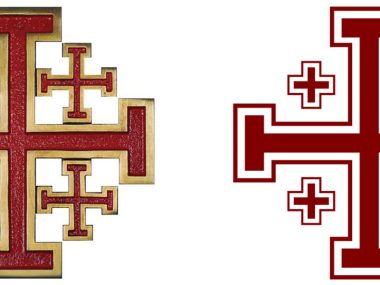
 Templar Uniform Editorial