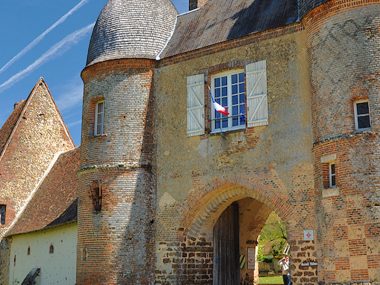
Most Templars never saw the Holy Land at all. The Order’s real day-to-day footprint was its network of preceptories — known as commanderies in France — local houses spread across England, France, Iberia, and beyond that quietly funded the entire war effort in the East.
What a Preceptory Actually Was
A preceptory was part monastery, part farm, part financial office. A handful of brothers, led by a preceptor, managed land granted to the Order by nobles seeking spiritual credit or military protection. The estate’s income — from crops, rents, and livestock — was collected and funneled toward equipping knights headed to the frontier.

Banking Before Banks
Because preceptories existed in a trusted network stretching from London to Jerusalem, the Order became the medieval world’s most reliable way to move money and valuables safely across borders. A pilgrim could deposit funds at a preceptory in England and withdraw the equivalent in the Kingdom of Jerusalem — an early letter-of-credit system that made the Templars indispensable to kings, not just crusaders.
Daily Life Inside the Walls
Life followed the monastic hours: prayer, meals in silence, and manual or administrative work in between. Brothers stationed at a preceptory weren’t idle waiting for war — they ran the estate, trained, and kept the Order’s accounts, all under the same Rule of poverty and obedience that governed knights on campaign.
The Biggest Preceptories
- Temple Church, London — the Order’s English headquarters, still standing today.
- Paris Temple — one of medieval Europe’s largest financial centers.
- Tomar, Portugal — the Convento de Cristo, which survived the Order’s suppression by rebranding as the Order of Christ.
What Happened to Them
When the Order was dissolved in 1312, its preceptories — and the wealth inside them — were the real prize. Most properties passed to the rival Knights Hospitaller, though in Portugal and a few other kingdoms, local rulers found ways to keep the Templar network intact under a new name.
FAQ
Is a preceptory the same as a commandery? Yes — preceptory is the English term, commandery the French; both describe the same type of local Templar house.
Did every preceptory send knights to fight? No. Most functioned purely as supply and finance bases; only the largest regional houses trained and deployed fighting brothers.
Templar Raven T-Shirt – Crusader Tee
Carry the Order’s history with you — shop Templar-inspired apparel built for everyday wear.
🇺🇸 Fast US shipping · 🇪🇺 Ships across the EU · 🔒 Secure checkout
 Templar Uniform Editorial