
The soul of the warrior: understanding the layers of Templar armor
Templar Shield Tee
From the battlefield to your wardrobe — the Templar Shield shirt.

🇺🇸 Fast US shipping · 🇪🇺 Ships across the EU · 🔒 Secure checkout
When we picture a Knight Templar, our minds often conjure an image of gleaming steel and pristine white cloth. It’s a powerful, almost mythical vision of righteous strength. Yet, the reality for a warrior monk on campaign in the unforgiving climate of the Holy Land was far grittier. Their armor wasn’t just a uniform; it was a second skin that bore the scars of travel, the rust of damp nights, and the dents of fierce combat. The true story of a Templar’s attire is not told in its polish, but in its weathering.

Achieving a historically accurate look for a Templar uniform, whether for reenactment, display, or personal passion, means looking beyond the surface. It requires an understanding of how each layer of their defensive system worked together and how the rigors of a military life would leave their mark. This isn’t about haphazardly aging your gear; it’s about telling a story. It’s about transforming a modern reproduction into a believable artifact, a testament to the battles fought and the long miles marched under a relentless sun. The secret lies in the layers – the padded gambeson, the formidable chainmail hauberk, and the iconic surcoat. Each piece tells part of the tale, and when weathered in concert, they create a portrait of a true veteran of the Crusades. In this guide, we will delve into the methods and mindset needed to weather your Templar chainmail and its accompanying layers, moving from a simple costume to a piece of living history.
The padded foundation: weathering the gambeson
Before a single ring of mail was donned, the Templar knight’s first layer of defense was the gambeson, or aketon. This padded garment was the unsung hero of medieval armor, a crucial piece of equipment that is too often overlooked. Made from multiple layers of linen or wool stuffed with scrap cloth, raw wool, or horsehair, the gambeson was a formidable piece of protection in its own right. Its primary purpose, however, was to be worn under chainmail, providing critical shock absorption from enemy blows. A sword or axe might be stopped by the mail, but without the gambeson’s padding, the concussive force could still break bones and cause significant internal injury.
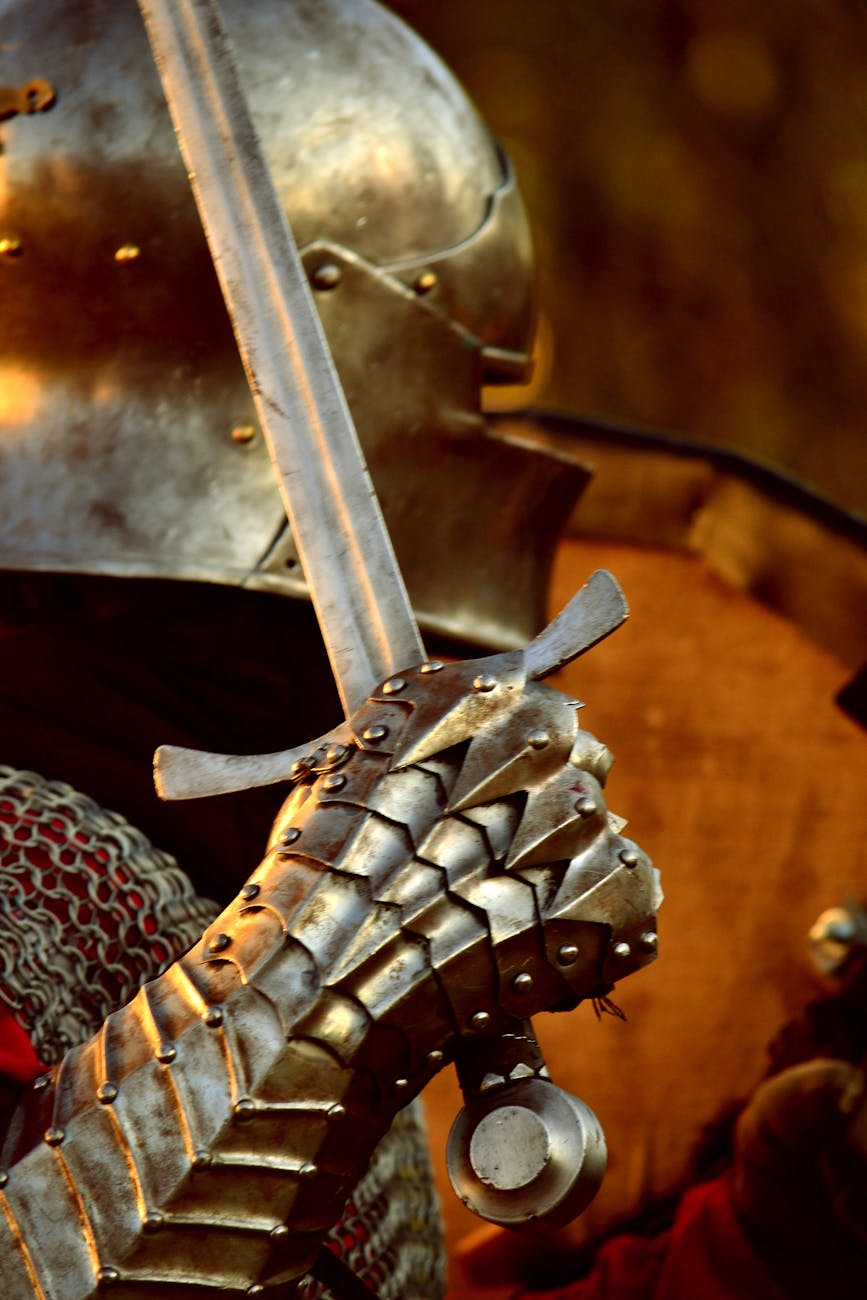
For the historical enthusiast, weathering begins here. A brand-new, perfectly clean gambeson under a set of aged chainmail immediately shatters the illusion of authenticity. A knight on campaign lived, slept, and fought in this garment. It would be profoundly affected by its environment and the wearer. The most immediate effect would be staining. Sweat would soak into the fabric, particularly around the collar, under the arms, and on the lower back, leaving behind darkened, salt-stained patches. The friction from the heavy chainmail hauberk resting on the shoulders and hips would cause compression and discoloration over time.
Then comes the dirt of the road. Marches through the dusty landscapes of the Levant would embed fine-grained sand and soil into the fibers of the gambeson, giving it a permanently grimy, off-white or yellowish hue. Rain would turn this dust into mud, which would cake onto the lower edges and sleeves. These stains wouldn’t be uniform; they would be concentrated in areas of contact and exposure. When considering weathering, think about the story. Is there a darker stain on one shoulder where a shield was carried? Are there grass stains near the knees from kneeling in prayer or making camp? Perhaps a small, dark spot from spilled oil while maintaining equipment.
Wear and tear is the final element. The quilting stitches would fray and break at high-stress points like the elbows, shoulders, and cuffs. The fabric itself would wear thin, especially where the mail and belts rubbed against it. A small, repaired tear could suggest a past wound or an accidental snag on a branch. To achieve this look, you can use natural dyes like tea or coffee for staining, and carefully use sandpaper or a wire brush on key areas to simulate abrasion. The goal is to create a garment that looks like a trusted, well-worn tool, not a neglected piece of cloth. This weathered foundation makes the aging applied to the chainmail on top of it all the more believable.
The steel skin: aging the hauberk and coif
The chainmail hauberk, a long shirt of interlocking metal rings, was the heart of the Templar’s defense. Often extending to the knees and including long sleeves, it was typically paired with a mail coif for head and neck protection. While modern reproductions are often made of shiny galvanized or stainless steel, historical mail was forged from iron or mild steel. This one crucial difference is the key to understanding how it should be weathered: historical mail could, and did, rust.
Rust was the knight’s constant enemy. It wasn’t just a cosmetic issue; severe rust could weaken the rings, making the armor less effective. Knights would go to great lengths to prevent it, often tumbling their mail in a barrel with sand and vinegar to scour it clean. However, on a long and arduous campaign, perfect maintenance was a luxury. A historically accurate weathered look isn’t about letting your mail turn into a solid block of orange corrosion. Instead, it’s about showing the signs of a constant, hard-fought battle against nature.
Authentic weathering on a hauberk should be subtle and logical. Rust would appear in the places hardest to clean and quickest to trap moisture. Think about the areas deep within the armpits, the inside of the elbows, the lower hem that might get soaked while fording a river, and the dense overlap of rings around the collar where the coif sits. This rust wouldn’t be bright orange but a dark, reddish-brown patina that settles into the crevices of the interlocked rings. For modern reenactors, this can be achieved safely using various methods, from saltwater sprays (if using mild steel) followed by a neutralizing bath and sealing, to specialized rust-effect paints and washes that provide control without damaging the armor.
Beyond rust, consider the physical toll of combat. A veteran’s hauberk would not be perfect. It would bear the marks of battle. A few strategically placed broken or missing rings can tell a powerful story. A small cluster of dented or flattened rings on the shield-side shoulder or torso could indicate where a heavy blow was deflected. These imperfections should be rare and thoughtfully placed to avoid making the armor look simply “damaged.” It’s about character, not destruction. Finally, the overall finish would not be bright and shiny. Constant handling, the oils from the gambeson, and the oil used in maintenance would give the steel a dull, slightly dark, and oily sheen. This non-reflective, utilitarian finish is far more realistic than a polished gleam. By combining a subtle patina of rust in key areas with minor physical imperfections and a dull overall finish, your chainmail transforms from a costume piece into the armor of a seasoned warrior.
The final canvas: weathering the surcoat and accessories
The final layer, the white surcoat emblazoned with the bold red cross, is perhaps the most iconic element of the Knights Templar uniform. Its purpose was twofold: it identified the knight as a member of the Order and, just as importantly, protected the chainmail from the direct heat of the sun, which could turn the armor into an oven. Just like the layers beneath it, a pristine white surcoat has no place on a battle-hardened knight.
The surcoat was the knight’s outer shell, bearing the brunt of the elements. Its weathering should reflect the story of the mail and gambeson beneath it. The brilliant white linen or wool would quickly be stained by the dust of the road, turning it a dingy off-white or tan, especially along the bottom hem. Riding a horse on campaign would kick up mud and dirt, splattering the lower half of the garment and the sleeves. The sun’s relentless glare would fade the vibrant red of the cross, giving it a slightly less saturated, more weathered appearance over time.
Interaction with the armor is key to believable weathering. Where the mail coif rested on the shoulders, a faint rust-colored stain might bleed through onto the surcoat after a rainstorm. The heavy leather sword belt, cinched tightly around the waist, would leave its own mark. The area under the belt might remain slightly cleaner than the rest of the surcoat, creating a subtle line of contrast. The friction of the belt and scabbard would cause fraying and wear along the waistline. The hem of the surcoat, especially a knight who fought on foot, would be frayed, torn, and tattered from catching on rough terrain and the general chaos of combat.
The leather accessories themselves are crucial storytellers. A new, stiff leather belt looks out of place. A knight’s sword belt was a piece of functional equipment that carried the weight of his primary weapon. The leather would become supple and darkened with sweat and oil. It would bear scuffs, scratches, and nicks. The holes for the buckle would stretch from use. The same goes for the scabbard, shield straps, and any pouches worn. This isn’t just about making things look old; it’s about making them look used. By integrating the weathering across all layers—the sweat stains on the gambeson, the rust on the mail, the grime on the surcoat, and the wear on the leather belt—you create a cohesive and authentic narrative. You are no longer just wearing a uniform; you are embodying the history of a warrior who lived, fought, and survived in it.

 Templar Uniform Editorial


