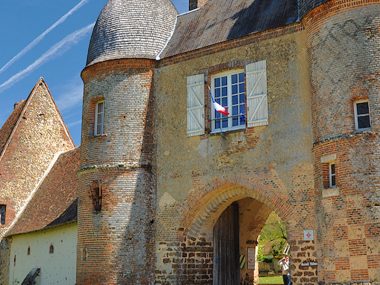
For many, the word ‘castle’ conjures images of gallant knights, courtly love, and dark, brooding dungeons. These towering stone giants loom large in our collective imagination, the settings for countless legends, epic battles, and romantic tales. But what if we told you that much of what we believe about these magnificent structures is steeped more in fantasy than fact? As enthusiasts of medieval history and the legendary Knights Templar, we understand the allure of uncovering the truth behind the myths. The castles of the Middle Ages, particularly those erected by orders like the Templars, were far more complex, practical, and fascinating than often portrayed. They were not merely regal residences but formidable bastions, bustling communities, and strategic lynchpins of an ever-shifting political landscape.
Today, we embark on a journey to peel back the layers of romanticized fiction and delve into the authentic, often stark, reality of medieval castles. From their ingenious architecture to the everyday lives of those who inhabited their walls, we will explore the true purpose and profound impact of these stone behemoths. We’ll consider the sheer human effort required to construct them, the strategic brilliance behind their placement, and the stark contrast between their grand exteriors and the often-cramped lives within. Crucially, we will also turn our gaze to the Holy Land, where the Knights Templar themselves became master builders, erecting some of the most impressive and enduring fortresses of the Crusader era. Prepare to re-evaluate your perception of these iconic structures and discover the true marvels that lie beyond the myths.

The stone heart of the medieval world: architectural marvels and strategic strongholds
When we picture a medieval castle, we often envision a grand, sprawling palace designed for a king or queen. While some later castles did evolve into more comfortable residences, their primary purpose throughout most of the Middle Ages was unequivocally military. These were not mere homes; they were instruments of power, projection, and protection, strategic strongholds built to dominate landscapes, control trade routes, and defend territories. The very act of constructing a castle was a monumental undertaking, requiring immense resources, skilled labor, and years, often decades, of unwavering commitment. Imagine the sheer manpower involved in quarrying tons of stone, transporting it across difficult terrain, and then hoisting it, block by painstaking block, into towering walls and turrets, all without the aid of modern machinery.
Early castles, such as the ubiquitous motte-and-bailey designs, were relatively simple yet highly effective. A large earth mound (motte) topped with a wooden or stone keep, protected by a palisade and surrounded by a ditch and outer enclosure (bailey), allowed for quick construction and immediate defensive capability. As warfare evolved, so too did castle architecture. Timber structures gave way to more permanent stone keeps, which gradually became more sophisticated. The development of concentric castles, with their multiple rings of defensive walls, each higher than the one in front, represented the pinnacle of medieval military engineering. This design, perfected in the Crusader states and later adopted in Europe, created a killing zone between the walls, allowing defenders to rain down arrows and projectiles on attackers trapped in the outer ward. Features like arrow slits, murder holes, portcullises, and barbicans were not aesthetic choices but deadly practicalities, each designed to slow, deter, and ultimately repel an enemy siege.
The strategic placement of these fortresses was paramount. Castles were often built on high ground, overlooking vital rivers, mountain passes, or coastal areas, giving their garrisons control over movement and trade. They served as administrative centers, judicial hubs, and economic engines for the surrounding regions. A lord’s power was often directly tied to the strength and number of his castles. They weren’t just static defenses; they were active participants in the geopolitics of the era, symbols of authority and focal points for regional control. Beyond defending against external threats, castles also served as internal policing instruments, projecting the lord’s authority over his own lands and suppressing local rebellions. Their very presence dictated the terms of medieval life, making them truly the stone heart of their world, a testament to human ingenuity in an age of constant conflict.
Life within the walls: beyond courtly romance and dungeon horrors
The popular imagination often paints a vivid picture of castle life: knights in shining armor perpetually jousting in the courtyard, elegant ladies in flowing gowns attending lavish banquets, and a perpetually dark, damp dungeon filled with unfortunate souls. The reality, while perhaps less dramatic in its day-to-day rhythm, was infinitely more gritty, complex, and fascinating. A medieval castle was a self-sufficient microcosm, a bustling community housing not just the lord and his family, but also a substantial garrison of soldiers, numerous servants, craftsmen, priests, and sometimes even local villagers seeking refuge during times of unrest. Far from being centers of continuous revelry, most castles were practical, functional, and often quite spartan environments, especially for the vast majority of their inhabitants.
Daily life within the castle walls was governed by routine and necessity. The garrison’s primary duty was vigilance and readiness. Soldiers trained, maintained their weapons and armor, and stood watch on the ramparts, ever alert to potential threats. For the servants, life was a continuous cycle of labor: cooking, cleaning, fetching water, tending to animals, and maintaining the castle’s immense infrastructure. The great hall, often depicted as a scene of constant feasting, served many purposes – it was a dining room, a court, an administrative office, and sometimes even a sleeping area for retainers. Privacy, as we understand it today, was a luxury rarely afforded. Even the lord and lady’s chambers, while more comfortable, were often multi-purpose spaces where business was conducted and servants were always present.
Hygiene was rudimentary by modern standards. Latrines, often simple chutes discharging directly into the moat or a cesspit, were common, and bathing was infrequent. The air within the castle walls could be a heady mix of cooking fires, animal odors, and human waste. Meals, while sometimes grand affairs for the lord, were often practical and seasonal for everyone else, relying heavily on local produce, game, and preserved foods. The “dungeon,” so often a place of unimaginable torture in fiction, was more frequently a storeroom, a cellar, or a basic holding cell, though grim conditions were certainly a reality for prisoners of war or criminals. Life was dictated by the seasons, the demands of defense, and the social hierarchy, a far cry from the endless merriment and romantic escapades of folklore.
Yet, amidst these practical realities, castles also fostered a unique sense of community and security. For those living under their protection, the castle represented safety from raiding parties, a place to trade, and a source of justice. It was a center of power and order in a chaotic world, and understanding the practicalities of life within its walls allows us to appreciate the true resilience and adaptability of medieval people, including the disciplined warrior-monks of the Knights Templar, who lived an even more austere existence within their formidable strongholds.
Fortresses of faith and power: templar strongholds in the holy land
While European castles represent an incredible testament to medieval engineering, it was in the Crusader states of the Holy Land that castle building reached its zenith, particularly at the hands of military orders like the Knights Templar. Driven by an unwavering faith and immense wealth accumulated through donations, the Templars became not only formidable warriors but also master builders, erecting some of the most sophisticated and enduring fortresses of their time. These Templar castles were not just defensive positions; they were vital logistical hubs, symbols of Christian power, and permanent anchors in a hostile and volatile landscape, serving as crucial links in the defense of the Latin East.
One of the most iconic Templar strongholds was Krak des Chevaliers, though initially built by the Syrian Emirate, it was significantly expanded and perfected by the Hospitallers (a sister order to the Templars). However, the Templars themselves commanded an impressive array of fortifications, each designed with meticulous detail to withstand relentless sieges. Castles like Safed, overlooking the Sea of Galilee, or the impressive seaside fortress of Chastel Pèlerin (Athlit), perched dramatically on a promontory, demonstrated the Templars’ strategic acumen and architectural prowess. These were often concentric castles, with multiple layers of walls, towers, and ditches, designed to be almost impregnable, pushing the boundaries of defensive design. The walls were thicker, the towers more numerous, and the internal defenses more intricate than many of their European counterparts, adapted to the specific challenges of warfare in the Levant.
Life within these Templar fortresses was distinct. Unlike secular castles, Templar strongholds were monastic communities as much as military garrisons. The warrior-monks adhered to a strict rule, emphasizing austerity, discipline, and constant readiness. Their days were filled with prayer, military training, and the maintenance of their formidable defenses. There were no courtly feasts or romantic dalliances; instead, the focus was entirely on their sacred mission to defend the Holy Land. These castles served as a network, allowing the Templars to control vast territories, protect pilgrims, and launch military operations. They were self-sufficient, equipped with vast storerooms, chapels, barracks, and sometimes even sophisticated water systems to ensure survival during long sieges. The scale of their constructions was staggering, reflecting not just their wealth, but their deep commitment and organizational capabilities.
The fall of these Templar strongholds, one by one, marked the eventual decline of the Crusader states. Yet, their ruins stand today as enduring monuments to an extraordinary chapter in history. They represent the fusion of military necessity with spiritual devotion, a testament to the Templars’ unparalleled ability to build, defend, and command in an age defined by faith and steel. Exploring these fortresses allows us a direct glimpse into the physical world of the Knights Templar, revealing the formidable foundations upon which their legendary uniforms and unwavering resolve were tested.
The castles of the Middle Ages, far from being mere backdrops for fantastical tales, were complex, vital, and awe-inspiring structures that profoundly shaped medieval society. They were ingenious feats of engineering, strategic bastions, and bustling communities that housed a diverse array of people, all living lives dictated by necessity, defense, and discipline. From the sheer logistical challenge of their construction to the practical realities of daily life within their formidable walls, understanding the truth behind these stone giants enriches our appreciation for an incredible era.
And for those of us drawn to the legacy of the Knights Templar, these explorations gain an even deeper resonance. The Templars’ castles, particularly those in the Holy Land, were not just fortresses but embodiments of their unique identity as warrior-monks. They represent the physical manifestation of their spiritual zeal, military prowess, and unparalleled organizational capability. In every thick wall, every strategically placed tower, and every fortified gatehouse, we can discern the echoes of their unwavering commitment to their sacred mission. As we continue to delve into the world of medieval attire and Templar history, remembering the true nature of their castles allows us to better grasp the formidable world in which these legendary figures lived, fought, and built. The myths may capture our imagination, but the reality of these medieval marvels truly captivates the soul.

 Templar Uniform Editorial