The call to chivalry in a modern world
Why would someone in the 21st century choose to align themselves with an order inspired by medieval warrior monks? The reasons are as complex as they are deeply human. In a world often characterized by moral ambiguity and social isolation, the clear-cut virtues of chivalry offer a powerful antidote. Modern knightly orders provide a structured path for personal development, a framework built upon principles that have stood the test of time. This is not about escaping the modern world, but about navigating it with greater intent and integrity. The new member is often someone who feels a void, a sense that the traditional pillars of community and purpose have eroded. They are searching for a sense of belonging that transcends superficial social networks, seeking a genuine brotherhood or sisterhood forged in shared values and mutual respect.


The core appeal lies in the revival of knightly virtues, re-contextualized for today’s challenges. These are not archaic rules, but a practical guide to living an honorable life. Principles like integrity, service to others, humility, and courage are timeless. A modern Templar-inspired group might focus its service on local charity work, mentoring programs, or historical preservation. The ‘battle’ is no longer fought with a sword, but against apathy, injustice, and personal weakness. This modern quest is what draws in new aspirants. They see a community where they are held to a higher standard, not by a distant authority, but by their own peers and their shared commitment to a noble code. The ceremonies and rituals, far from being mere pageantry, serve as powerful rites of passage. They mark a member’s journey from an ordinary individual to a dedicated part of a collective mission, reinforcing the gravity and sincerity of their commitment. This transformation is a powerful draw for those who want their lives to have a deeper meaning and a more lasting impact on the world around them.
Forging a new brotherhood: The recruitment and vetting process
Reviving an ancient order for a new generation requires a thoughtful approach to recruitment and integration. The mystique and tradition must be preserved, yet the doors must be open enough for sincere seekers to find their way. Unlike a typical social club, joining a modern knightly order is a deliberate and often lengthy process—a journey in itself. It begins not with an application form, but with a connection. Many groups now maintain a dignified online presence, using websites and carefully curated social media to articulate their mission and values. This digital outreach serves as a beacon for those who are already searching, allowing them to learn about the order’s history, principles, and activities before making contact. However, the true recruitment happens through personal interaction, whether at public events, charity functions, or private informational meetings where potential members can speak with current knights and get a genuine feel for the community’s culture.

Once a candidate expresses interest, they enter a period of vetting and observation, often referred to as a postulant or aspirant phase. This is a crucial time for both the individual and the order. The group assesses the candidate’s character, sincerity, and commitment. Are they truly drawn to the ideals of service and self-improvement, or are they merely fascinated by the regalia and titles? Key qualities they look for include:
- Integrity: A consistent record of honesty and ethical behavior in personal and professional life.
- Commitment to Service: A demonstrated desire to help others and contribute to the community.
- Humility: An understanding that membership is about serving a cause greater than oneself.
- Teachability: A willingness to learn, grow, and accept guidance from senior members.
- Fraternal Spirit: The ability to work well with others and contribute positively to the harmony of the group.
Simultaneously, this period allows the aspirant to determine if the order is the right fit for them. They participate in meetings, social gatherings, and service projects, experiencing the brotherhood firsthand. This gradual immersion ensures that when a new member is finally invited to take their vows, they do so with a full understanding of the obligations and rewards. This meticulous process protects the integrity of the order, ensuring that it grows not just in numbers, but in the quality and dedication of its members. It transforms the act of joining from a simple transaction into a meaningful rite of passage, creating a stronger, more cohesive, and purpose-driven community.
The role of regalia and ritual in modern templar life
For any visitor to our site, the power of Templar attire is self-evident. The uniform is not a costume; it is a sacred vestment, a tangible link to the order’s history, and a powerful symbol of a member’s commitment. In modern knight clubs, regalia plays an indispensable role in forging a collective identity and reinforcing the group’s core tenets. When a new member is finally invested and permitted to wear the mantle, it is a profound and transformative moment. The simple act of donning the white tunic and mantle connects them to a lineage of chivalry stretching back centuries. It is a physical representation of the vows they have taken and the ideals they have sworn to uphold. The stark white of the mantle symbolizes the purity of intent and the new life they are embracing, while the iconic red cross signifies a readiness to serve and sacrifice for their beliefs and their community.
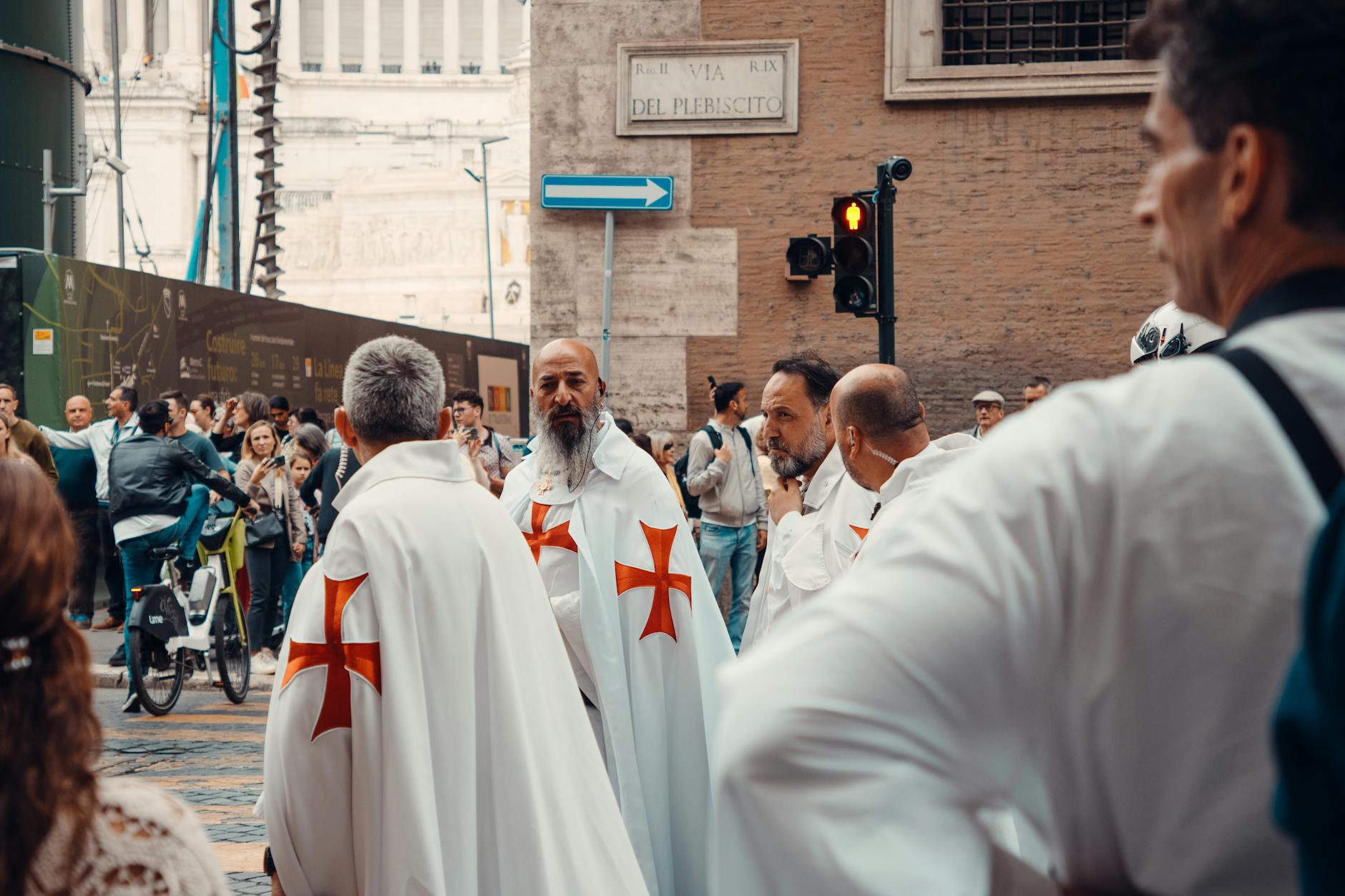
Each piece of the regalia is imbued with meaning. The belt, or cincture, represents chastity and continence, a reminder to control one’s base impulses. The sword, often ceremonial, is a symbol of justice, truth, and the defense of the innocent. In a modern context, it represents the member’s duty to fight against injustice in all its forms. Wearing this uniform together creates a powerful sense of unity and equality. Beneath the mantles, members come from all walks of life—they are doctors, mechanics, artists, and executives. But when they stand together in their regalia, these worldly distinctions fade away. They are simply brothers and sisters in a common cause, equals in their shared quest. This visual unity is essential for building the deep bonds that characterize these orders. Rituals and ceremonies, conducted while in full regalia, further cement these bonds. The structured formality of these events elevates the proceedings, creating a sacred space where the order’s history is honored and its future is forged. For a new member, participating in these rituals is the final step in their integration, the moment they truly feel they have become part of the legend in every stitch.
The journey into a modern knightly order is a call to be part of something timeless. It is a commitment to personal growth, selfless service, and authentic community. By carefully blending revered traditions with an understanding of modern needs, these clubs are not just surviving; they are thriving. They are successfully reviving the spirit of the Templars, proving that the quest for a life of honor and purpose is as relevant today as it was nine centuries ago. For those who hear the call, the path is there to be walked, and a new brotherhood is waiting to be forged.

 Templar Uniform Editorial