
Echoes of Eternity: The Enduring Allure of Templar Symbolism
In the annals of history, few orders capture the imagination quite like the Knights Templar. Their legacy, woven from threads of faith, martial prowess, and an enigmatic mystique, continues to resonate through the centuries. For many, this fascination extends beyond dusty manuscripts and ancient ruins, finding expression in the tangible world of modern adornment. But how does one honor an order renowned for its ascetic vows with something as inherently decorative as jewelry? The answer lies not in replicating historical possessions, but in capturing the profound symbolism and unwavering spirit that defined these warrior monks. It is about translating the silent language of their crosses, seals, and ethos into pieces that speak volumes in contemporary elegance.
Consider the very essence of the Templar uniform – stark, functional, yet imbued with deep spiritual meaning. The white mantle, the red cross – these were not mere garments, but declarations of purpose, faith, and sacrifice. While the individual Templar knight eschewed personal ostentation, the order itself understood the power of visual identity and symbolic representation. Their seals, their banners, their very architecture were replete with meaning, designed to inspire awe, devotion, and recognition. It is this rich tapestry of symbolism that provides the fertile ground for modern jewelry designers, allowing them to craft pieces that are not just beautiful, but deeply meaningful, serving as a personal testament to a timeless ideal.

This journey into Templar-inspired jewelry is more than a mere fashion statement; it is an act of homage, a personal connection to a lineage of courage and conviction. It asks us to look beyond the superficial glitter and delve into the profound narratives embedded within each design. What stories do these symbols tell? What virtues do they represent? And how can wearing them today serve as a bridge between our modern lives and the hallowed halls of medieval chivalry? Join us as we explore the intricate dance between ancient legacy and contemporary design, uncovering how jewelry can become a powerful conduit for honoring the enduring spirit of the Knights Templar.
The Sacred Language of Medieval Adornment
To truly appreciate modern Templar-inspired jewelry, one must first understand the role of adornment in the medieval world. Unlike today, where jewelry often serves primarily as a fashion accessory, medieval pieces were imbued with layers of significance. They were potent symbols of status, wealth, religious devotion, and even protection. Kings wore crowns not just for beauty, but as divine sanction; nobles displayed elaborate rings and brooches to signify their lineage and power. Pilgrims wore badges and amulets as tokens of their journeys and prayers. Every gem, every metal, every engraved motif carried a specific message, understood by the society that created it.
For the common folk, jewelry might be simpler – a silver cross, a protective charm against illness or evil. But for the elite, and especially within religious contexts, craftsmanship reached astonishing levels. Reliquaries, often adorned with precious metals and jewels, were not merely containers but sacred objects designed to inspire reverence and awe. Bishops wore rings signifying their office, and even monastic orders, despite vows of poverty, often possessed ornate chalices, crosses, and liturgical vestments that were themselves works of art, reflecting the glory of God. The materials themselves held meaning: gold for purity and divinity, silver for moon and purity, specific gemstones for their perceived magical or healing properties.
Within this context, the Templars, while personally austere, were not entirely divorced from the symbolic power of objects. Their seals, for instance, were not merely administrative tools but powerful visual statements of their identity and mission. The iconic image of two knights on one horse, or the various forms of the Templar cross, were instantly recognizable and carried immense weight. These symbols, though not worn as personal jewelry by the knights themselves, were central to the order’s identity and communication. They were the visual anchors of their spiritual and temporal authority, understood and respected across Christendom. It is these foundational symbols, rather than personal trinkets, that form the true historical bedrock for modern Templar jewelry, allowing us to connect with their essence without betraying their vows.
The Templar Cross: A Symbol Transcending Time
At the heart of all Templar symbolism, and indeed much of modern Templar jewelry, lies the cross. But it is not just any cross; it is often the distinctive cross pattée, or sometimes variations like the Maltese cross, each with its own subtle nuances and historical associations. The cross pattée, with its arms narrow at the center and flaring outwards, is instantly recognizable and deeply evocative. It was emblazoned on their white mantles, their shields, and their banners, a constant reminder of their dual role as warriors of Christ. For the Templars, the cross was not merely a religious emblem; it was a battle standard, a vow, and a promise of salvation. It represented their unwavering commitment to defend the Holy Land and protect pilgrims, a sacred duty undertaken with fierce devotion.
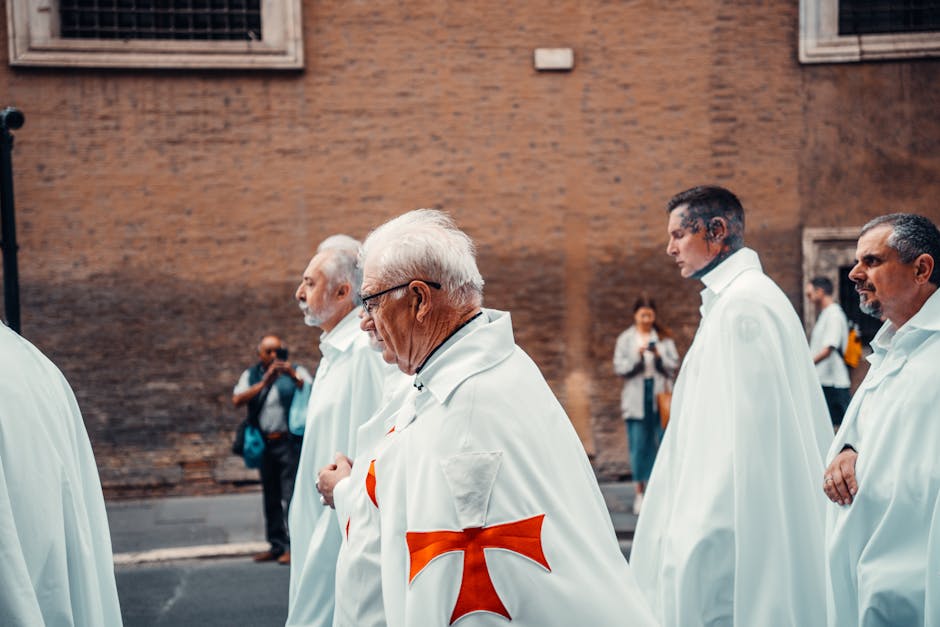
The profound significance of the Templar cross lies in its multifaceted meaning. It symbolizes sacrifice, redemption, and the ultimate victory of faith over adversity. For the knights, it was a constant spiritual anchor, a visible manifestation of their covenant with God. In battle, it was a rallying point, inspiring courage and unity. In times of peace, it was a mark of their sacred calling, distinguishing them from other military orders and secular knights. This deep spiritual and historical resonance makes the Templar cross an exceptionally powerful motif for modern jewelry. It’s not just an aesthetic choice; it’s a statement of values, a silent affirmation of principles that echo the Templar ethos: courage, integrity, and devotion to a higher purpose.
Today, designers interpret the Templar cross in countless ways, from bold, statement pieces to subtle, understated accents. It can be found etched into silver rings, cast in gold pendants, or intricately detailed on cufflinks. The choice of material and craftsmanship further enhances its meaning. A rugged, oxidized silver cross might evoke the harsh realities of the Crusades, while a polished gold cross set with a ruby might speak to the order’s spiritual majesty and the blood shed in its service. Each variation, each artistic interpretation, serves to keep the flame of Templar legacy alive, allowing individuals to carry a piece of that ancient spirit with them, a constant reminder of the virtues it represents. It transforms a simple piece of adornment into a personal emblem of enduring ideals.
Beyond the Cross: Exploring Other Templar Motifs
While the cross remains the quintessential Templar symbol, the order’s rich iconography extends to other powerful motifs that offer equally compelling inspiration for modern jewelry. One of the most iconic is the seal depicting two knights riding on a single horse. This image, often interpreted as a symbol of the Templars’ initial poverty and humility, or perhaps their brotherhood and shared purpose, is a profound visual narrative. It speaks to camaraderie, shared sacrifice, and the collective strength derived from unity. For modern wearers, this motif can represent loyalty, partnership, and the understanding that true strength often lies in collaboration and mutual support, echoing the bonds forged between the warrior monks.

Another significant, albeit less frequently seen, symbol is the Agnus Dei, or Lamb of God. This motif, often depicted with a lamb carrying a banner with a cross, represents Christ’s sacrifice and purity. Given the Templars’ deep religious devotion and their role as protectors of pilgrims to the Holy Land, the Agnus Dei held immense spiritual weight for them. Incorporating this symbol into jewelry offers a more overtly spiritual connection to the Templar legacy, emphasizing faith, innocence, and redemption. It provides an alternative for those who wish to honor the Templars’ spiritual core with a symbol that speaks directly to their Christian faith, offering a gentle yet powerful counterpoint to the more martial imagery.
Furthermore, subtle architectural elements, heraldic beasts, or even stylized representations of Templar castles and strongholds can inspire unique jewelry designs. Imagine a ring with a subtle crenellated edge reminiscent of a Templar fortress, or a pendant featuring a stylized lion, a common symbol of courage and royalty in medieval heraldry. These less obvious motifs allow for a more nuanced and sophisticated interpretation of the Templar legacy, appealing to those who appreciate historical depth and intricate design. By exploring these diverse symbols, modern jewelry can offer a broader spectrum of expressions, each piece telling a different facet of the rich and complex Templar story, ensuring that the legacy is honored in its full historical and spiritual breadth.
Crafting the Legacy: Modern Elegance and Artistry
The transition from ancient symbolism to modern elegance is a delicate art, requiring not only an understanding of history but also a mastery of contemporary design and craftsmanship. Modern Templar-inspired jewelry is not about crude replicas; it is about sophisticated interpretation, where the essence of the past is distilled into forms that resonate with today’s aesthetic sensibilities. Designers today employ a vast array of materials and techniques, from traditional precious metals like gold and silver to more contemporary choices like stainless steel or even ethically sourced gemstones, each chosen to enhance the narrative of the piece.
Consider the meticulous detail involved in crafting a Templar cross pendant. A skilled artisan might use lost-wax casting for intricate three-dimensional forms, ensuring every flare of the cross’s arms is perfectly rendered. Polishing techniques can range from a high-mirror shine that reflects light with dazzling brilliance, to a brushed or oxidized finish that lends an antique, battle-worn patina, evoking the ruggedness of the Crusades. Gemstones, though not historically prevalent in personal Templar adornment, are often incorporated today to add a touch of luxury and symbolic color – a deep red garnet or ruby to represent the blood of Christ and the Templars’ sacrifice, or a sapphire for truth and heavenly grace.

The beauty of modern craftsmanship lies in its ability to blend historical reverence with individual expression. A ring might feature a subtly engraved Templar cross on its inner band, a private symbol for the wearer, while its exterior remains sleek and contemporary. Cufflinks might bear the two knights on one horse motif, a discreet nod to brotherhood and shared purpose in a professional setting. These pieces are designed not just to be worn, but to be cherished, passed down, and to serve as conversation starters, allowing the wearer to share the rich history and values they represent. This careful balance of historical authenticity, symbolic depth, and modern aesthetic appeal ensures that Templar-inspired jewelry remains relevant, meaningful, and truly elegant in the 21st century.
Wearing the Legacy: A Timeless Testament
To wear a piece of Templar-inspired jewelry is to do more than simply adorn oneself; it is to make a statement, to carry a fragment of history, and to align oneself with a set of enduring virtues. It is a personal emblem that speaks volumes without uttering a single word, connecting the wearer to a lineage of courage, faith, and unwavering conviction. In a world often characterized by fleeting trends and superficiality, such jewelry offers a profound anchor, a reminder of principles that transcend time and circumstance. What does it mean to you to wear a symbol that once graced the mantles of warrior monks who shaped the course of history?
For many, it is a source of inspiration and strength. The Templar cross, worn close to the heart, can serve as a daily reminder to face challenges with fortitude, to uphold one’s beliefs, and to act with integrity. The two knights on one horse might symbolize the importance of loyalty and camaraderie in one’s own life, whether in personal relationships or professional endeavors. These pieces become more than just metal and stone; they become talismans, imbued with personal meaning and a connection to a grander narrative. They are a silent vow to embody the best aspects of chivalry in a modern context, to stand for something greater than oneself.
Ultimately, Templar-inspired jewelry is a celebration of a legacy that refuses to fade. It is a testament to the power of symbols to bridge centuries, to evoke emotions, and to inspire action. By choosing to wear these pieces, we participate in a continuous dialogue with the past, ensuring that the spirit of the Knights Templar – their devotion, their courage, their mystique – continues to shine brightly, not just in history books, but in the elegant gleam of modern adornment. It is a way of saying that the ideals of chivalry are not relics of a bygone era, but living principles, reborn and honored in every carefully crafted piece, inviting us all to reflect on the virtues that still call to us from the depths of history.

 Templar Uniform Editorial


