In the silent corridors of history, where the tales of warrior monks echo, few artifacts speak with as much authority as the ancient seals of the Knights Templar. Long before the crisp fold of a modern uniform or the gleam of a ceremonial sword, these small, intricate impressions in wax were the ultimate mark of authenticity. They were more than just a method for closing letters; they were a declaration of power, a guarantee of trust, and a physical manifestation of the Order’s identity. To hold a document bearing a Templar seal was to hold an unbreakable promise, backed by the might of the most formidable organization in Christendom. In a world built on oaths and honor, the Templar seal was the final word, documenting everything from papal decrees to the transfer of vast fortunes. Join us as we press into the wax and unveil the legends etched in these remarkable Templar treasures.
The two knights: A humble emblem of immense power
When one imagines a Templar seal, a single, powerful image often comes to mind: two knights, clad in mail, sharing a single horse. This was the sigil of the Grand Masters of the Order, the official seal of the Poor Fellow-Soldiers of Christ and of the Temple of Solomon. Its design is deceptively simple, yet it holds a universe of meaning that historians and enthusiasts have debated for centuries. The most common interpretation speaks directly to the Order’s founding principle: poverty. In their early days, the knights were said to be so poor they could only afford one horse for every two men. This image was a constant, humble reminder of their vows, even as the Order grew into one of the wealthiest institutions in the world. It was a visual anchor to their origins, a symbol that their spiritual mission transcended any material wealth they might accumulate in their role as protectors and bankers of Christendom.

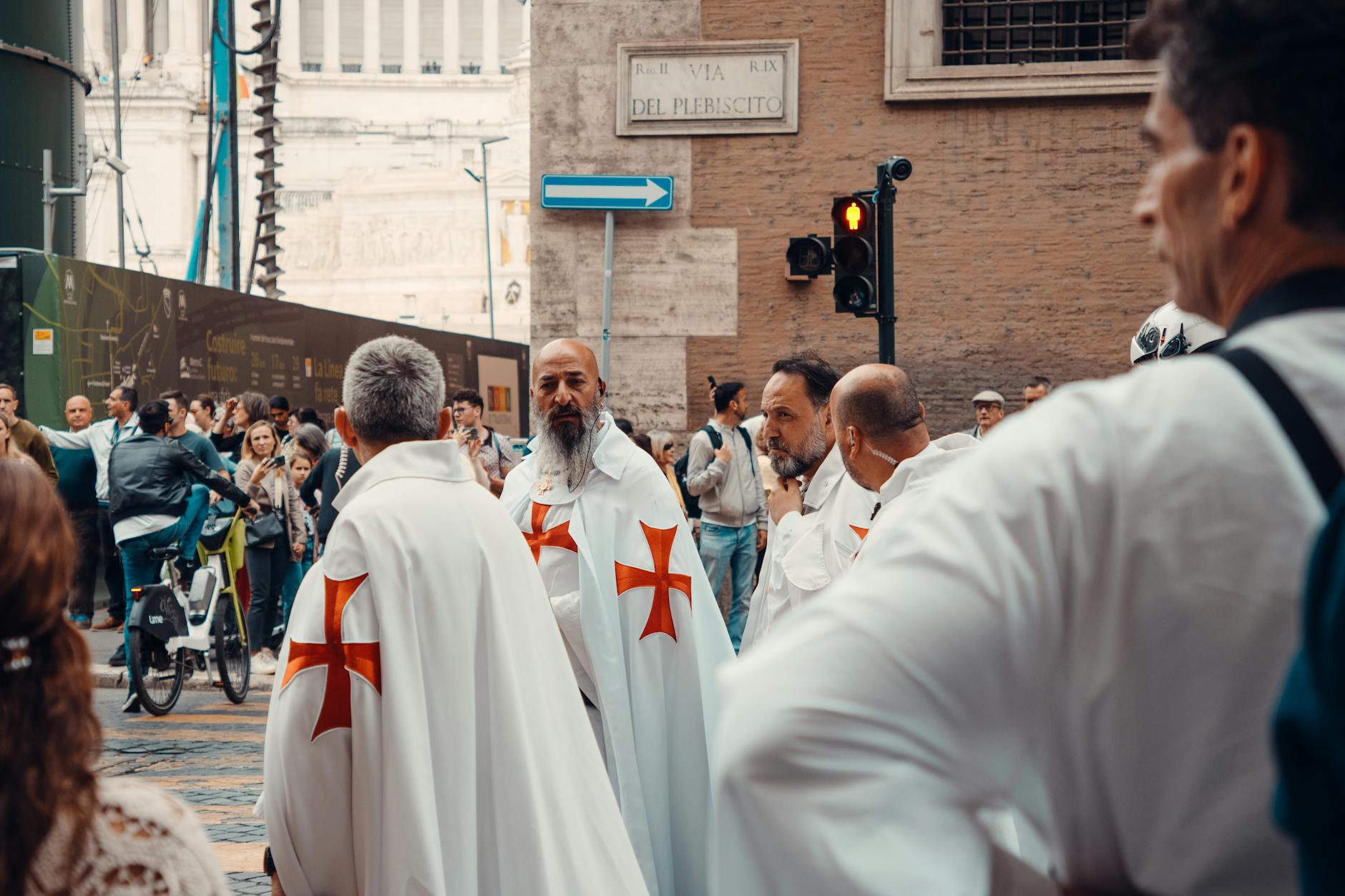
However, the symbolism runs far deeper than just a vow of poverty. The dual riders also represent the dual nature of the Templar himself: the monk and the soldier. He was a man of God and a man of war, a paradox that defined the very essence of the military orders. The seal captures this duality perfectly—two souls with a single purpose, riding together into the fray. This theme of brotherhood is also paramount. The Templars were a fraternity, bound by sacred oaths. The two knights on one mount signifies an unbreakable bond, a unity of purpose and spirit that made them such a formidable force on and off the battlefield. Each knight trusted the other with his life, and this seal was the corporate extension of that personal trust.
Over the years, more esoteric interpretations have emerged. Some see the two riders as representing the material and spiritual worlds, which the Templar had to navigate. Others suggest a Gnostic influence, hinting at a hidden, deeper knowledge. While these theories are more speculative, they add to the mystique that surrounds the Order. What remains certain is that this seal, known officially as the Sigillum Militum Xpisti (Seal of the Soldiers of Christ), was the ultimate symbol of the Grand Master’s authority. When impressed upon a document, it carried the full weight of the entire Order. It authenticated land grants, secured letters of credit that were the bedrock of their international banking system, and finalized treaties with kings and popes. It was a small circle of wax that commanded the respect and fear of an entire continent, a humble image that represented unimaginable power.
A hierarchy of impressions: Seals beyond the Grand Master
While the image of the two knights is iconic, it was by no means the only seal used by the Knights Templar. To assume so would be to misunderstand the vast, sophisticated, and highly organized nature of the Order. The Templars were a multinational corporation with a spiritual mission, and their administrative needs were immense. Consequently, they developed a complex hierarchy of seals, each with a specific function and level of authority, creating a meticulous system of documentation that was centuries ahead of its time. This system ensured authenticity and accountability across their sprawling network of preceptories, farms, and castles, from the Holy Land to the shores of Scotland.

At the top, of course, was the Grand Master’s seal. But beneath him, the great officers of the Order, such as the Marshal or the Treasurer, sometimes had their own personal seals for the business of their office. More significantly, authority was delegated regionally to Provincial Masters or Grand Priors who governed the Order’s territories in places like France, England, or Aragon. These powerful officials wielded their own distinct seals. While they often retained core Templar iconography, their seals would incorporate unique local elements. For instance, the Master of Aragon’s seal depicted a castle, reflecting the Order’s crucial role in the Reconquista—the centuries-long struggle to reclaim the Iberian Peninsula. These regional seals allowed for efficient administration, empowering local leaders to conduct business without requiring the Grand Master’s personal authorization for every transaction.
The tools of authenticity
The physical objects themselves were as important as the images they bore. The seal matrix, the die used to make the impression, was a highly valued object. Typically cast in bronze, lead, or sometimes even silver, it was a symbol of an official’s rank and was guarded jealously. To lose one’s seal matrix was a catastrophic failure of duty, as a stolen matrix could be used to forge documents and create chaos. The impression was made in beeswax, often colored with pigments like red vermilion to make it stand out and to signify importance. These wax impressions were attached to documents either directly (applied en plaqué) or hanging from a strip of parchment or cord. This tangible, physical verification was the medieval world’s most advanced form of security, a precursor to the modern notarized signature.
Individual commanderies also had their own seals for local business, often featuring simpler designs. These might include a simple cross pattée, the head of a bearded Templar, or a tower. This intricate system meant that a document’s origin and authority could be identified at a glance, simply by examining the seal. It was a brilliant administrative solution that allowed the Templars to manage their vast holdings and financial operations with unparalleled efficiency and security.
Etched in faith: The sacred symbolism of Templar seals
Beyond their administrative function, Templar seals were a canvas for the Order’s profound faith and identity. Each symbol was carefully chosen, a piece of visual theology that communicated the core tenets of their mission. While the two knights and various crosses are well-known, another device was just as common and held immense significance: the Agnus Dei, or Lamb of God. This symbol, depicting a lamb holding a cross or a banner, was a direct reference to Jesus Christ as the sacrificial lamb. For the Templars, it was a powerful and multifaceted emblem. It represented Christ’s sacrifice, which was the spiritual foundation of their crusade. It also symbolized innocence and purity, reminding the warrior monk of his sacred vows. On many seals, the lamb is shown looking backward, a posture interpreted as watching over its flock—a perfect metaphor for the Templars’ role as protectors of pilgrims and the Christian faith.

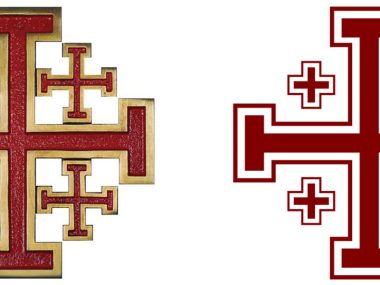
The cross, in its various forms, was naturally a dominant feature. The most recognizable is the Cross Pattée, with arms that are narrow at the center and flare out at the ends. This potent symbol was not just a mark of their Christian allegiance but a badge of martyrdom. It signified a Templar’s willingness to lay down his life for his faith, a vow every brother took. Other cross forms appeared as well, including the patriarchal cross with its two crossbars, often associated with the True Cross relic and the Kingdom of Jerusalem, where the Order was born.
From sacred architecture to mysterious beasts
Architectural motifs were also prevalent, directly linking the Order to its geographical and spiritual home. Many seals, particularly those of Eastern commanderies, featured a domed building. This was the Templum Domini, the Dome of the Rock on the Temple Mount in Jerusalem. The Al-Aqsa Mosque, adjacent to the Dome, served as the Templars’ headquarters, and they identified the entire site with the ancient Temple of Solomon. By placing this image on their seals, they were constantly reinforcing their identity as the guardians of Christianity’s most holy sites. Similarly, images of towers and castles symbolized their military role as defenders of the Crusader states, projecting strength and fortitude.
Intriguingly, some Templar seals feature more enigmatic imagery that has fueled centuries of speculation. Symbols like the Abraxas, a Gnostic deity, or gryphons and lions, sometimes appear. While many of these can be explained through the complex visual language of medieval heraldry and bestiaries, they have contributed to the persistent myth of the Templars as keepers of a secret, esoteric knowledge. Though often exaggerated, these unusual symbols show an Order that was intellectually and culturally engaged with the world around it, absorbing influences from the Byzantine and Islamic cultures they encountered in the East. Each seal, from the simplest to the most complex, was a carefully constructed statement—a document in itself, telling the world who the Templars were, what they believed, and the sacred duty to which they had sworn their lives.
 Templar Uniform Editorial