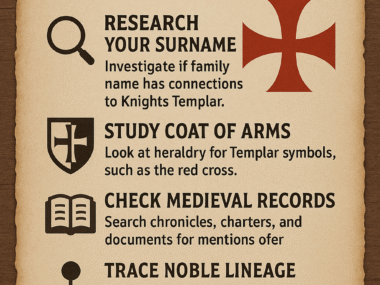
The Enduring Myth vs. Historical Reality
For centuries, the Knights Templar have captivated imaginations, their story woven into a tapestry of myth, legend, and whispered secrets. Popular culture often paints them as guardians of the Holy Grail, practitioners of arcane rituals, or the progenitors of shadowy secret societies that persist to this day. This romanticized portrayal, while undeniably compelling, frequently overshadows the profound historical reality of an order that was, for nearly two centuries, one of the most powerful and influential forces in medieval Europe and the Crusader states.
The allure of these myths, fueled by novels, films, and speculative theories, has created a formidable barrier to understanding the true nature of the Templars. While the mystique adds to their enduring appeal, it also obscures their actual contributions as military monks, sophisticated financiers, and crucial logistical operators. To truly appreciate their legacy, we must endeavor to peel back these layers of fiction and engage with the verifiable historical records that illuminate their complex and often contradictory existence.

Modern scholarship, benefiting from new archaeological discoveries, re-examinations of primary sources, and a more nuanced understanding of medieval society, is actively engaged in drafting a “new history” of the Templars. This revised perspective seeks to move beyond sensationalism, focusing instead on their organizational genius, their economic innovations, and their significant, albeit sometimes controversial, role in the political and religious landscape of their era. It’s a history that acknowledges the human ambition and vulnerabilities alongside their spiritual devotion and military prowess.
Beyond the Battlefield: Templars as Innovators
While their iconic white mantles adorned with the red cross are synonymous with fierce crusader knights, the Templars’ influence extended far beyond the battlefield. They were, in essence, the medieval world’s first multinational corporation, pioneering a sophisticated proto-banking system that revolutionized finance. Pilgrims and crusaders could deposit funds in Europe and withdraw them in the Holy Land using a form of letter of credit, effectively making travel safer and more efficient by eliminating the need to carry large sums of cash.
Their logistical capabilities were equally impressive. The Order managed vast networks of preceptories, farms, and ports across Europe and the Levant, ensuring a steady supply of men, horses, arms, and provisions for the Crusader states. This intricate supply chain was vital for sustaining the Christian presence in the East, demonstrating an administrative genius that rivaled, and often surpassed, that of many contemporary secular rulers. Their ability to manage resources and personnel across vast distances was a testament to their organizational structure and discipline.
Furthermore, the Templars were significant patrons and practitioners of architecture, constructing formidable castles like Safed and Chastel Pèlerin, which were marvels of military engineering. Their churches, often circular in design, reflected their spiritual connection to the Church of the Holy Sepulchre. These architectural endeavors, coupled with their administrative prowess in managing land and resources, highlight a multifaceted organization that was far more than just a fighting force. They were integral to the economic and infrastructural fabric of the medieval world.

Reconsidering the Fall: Political Intrigue and Economic Power
The dramatic dissolution of the Knights Templar in the early 14th century is often presented as a swift and decisive condemnation for heresy and idolatry. The traditional narrative speaks of secret rites, spitting on the cross, and worshipping a mysterious idol known as Baphomet. However, a closer examination of the historical context reveals a far more complex and politically charged scenario, where the charges leveled against them appear to be a convenient pretext for their destruction.
The primary instigator of their downfall was King Philip IV of France, known as “Philip the Fair,” who was deeply indebted to the Templars and coveted their immense wealth. The Order’s independence, its direct allegiance to the Pope, and its vast financial resources made it a formidable power bloc that challenged the burgeoning authority of national monarchies. Philip, facing severe financial difficulties and eager to consolidate his power, saw the Templars as both a solution to his monetary woes and an obstacle to his political ambitions.
Under immense pressure from Philip, Pope Clement V reluctantly initiated proceedings against the Order. The subsequent trials, conducted largely by the French Inquisition, involved widespread arrests, torture, and forced confessions. Many Templars, under duress, confessed to various heresies, only to recant later when given the chance, often leading to their execution as relapsed heretics. This systematic campaign of persecution, driven by political expediency and economic greed, ultimately led to the Papal Bull Vox in excelso in 1312, which officially suppressed the Order, not necessarily on grounds of proven guilt, but for the good of the Church and to avoid scandal.
The Templar Legacy in the Modern World
Despite their dramatic suppression, the legacy of the Knights Templar has endured, evolving and adapting across centuries. Their story continues to resonate deeply, inspiring a diverse array of groups from historical societies dedicated to accurate research to modern fraternal orders that claim a spiritual or symbolic lineage. This enduring fascination speaks to the powerful archetypes they represent: courage, sacrifice, mystery, and the struggle between faith and power.
The Templars’ symbolic resonance is particularly potent. The image of the crusader knight, the red cross on a white field, and the aura of ancient secrets continue to be powerful motifs in popular culture and various esoteric traditions. While many modern organizations bearing the Templar name have no direct historical link to the original medieval order, they often draw upon its ideals of chivalry, service, and brotherhood, reinterpreting them for contemporary contexts. This cultural appropriation, though sometimes historically inaccurate, underscores the profound impact the Templars had on the collective imagination.
Academically, the Templars remain a vibrant field of study. New archival discoveries, such as the Chinon Parchment which revealed Pope Clement V’s initial absolution of the Templars before succumbing to Philip IV’s pressure, continually reshape our understanding. These ongoing investigations challenge long-held assumptions and add layers of nuance to their history, ensuring that the “new draft” of Templar history is a perpetually evolving document. The Templars serve as a powerful reminder of how historical narratives are constructed, deconstructed, and reimagined over time.
Charting Future Paths in Templar Understanding
As cultural historians, our journey into the past is never truly complete; it is a continuous process of discovery, reinterpretation, and critical engagement. The story of the Knights Templar, perhaps more than any other medieval order, exemplifies this dynamic nature of history. Each new piece of evidence, each fresh perspective, adds another brushstroke to the evolving portrait of these enigmatic warrior monks, inviting us to look beyond the well-worn paths of popular myth.
For those drawn to the allure of the Templars, the most rewarding path lies in seeking out credible scholarship and primary sources. Engaging with the work of dedicated historians, rather than relying solely on sensationalized accounts, allows for a deeper, more authentic connection to their world. It’s about appreciating the intricate details of their daily lives, their administrative genius, and the complex political landscape they navigated, rather than just the dramatic legends surrounding their demise.
The enduring fascination with the Templars is a testament to their profound impact, but also a call to intellectual rigor. By embracing the “new draft” of Templar history, we not only honor the truth of their past but also cultivate a more sophisticated understanding of how history itself is written and rewritten. This ongoing exploration ensures that the legacy of the Knights Templar remains not a static relic, but a living, breathing narrative that continues to inform and inspire.

 Templar Uniform Editorial