When we picture a grand medieval siege, our minds often conjure images of stone-flinging trebuchets and lone knights in shining armor. Yet, looming over this chaotic battlefield is perhaps the most awe-inspiring and terrifying engine of war: the siege tower. Often called a belfry or a ‘breaching tower,’ this rolling fortress was far more than a simple wooden box on wheels. It was a masterpiece of medieval engineering, a psychological weapon, and a brutal stage for some of the fiercest combat of the era. For orders like the Knights Templar, whose martial prowess was tested in the great sieges of the Holy Land, understanding the mechanics and terror of the siege tower was a matter of life and death.
Today, we see them as relics of a bygone age, props in movies that get spectacularly torched by a single fire arrow. But the reality was infinitely more complex. These structures weren’t just brute force instruments; they were the culmination of sophisticated planning, immense resource management, and a deep understanding of both engineering and human fear. To truly appreciate the world of the medieval warrior, from the stitches on their surcoat to the strategy in their minds, we must look beyond the myths and decode the secrets of these incredible wooden behemoths.

The anatomy of a medieval terror: building the rolling fortress
A siege tower didn’t just appear on the battlefield overnight. Its construction was a monumental undertaking, a clear signal to the defenders of a castle that the attackers were settling in for a long, grueling assault. The primary goal was to build a mobile structure tall enough to overtop the castle’s walls, allowing attacking soldiers to storm the battlements on relatively even footing. This required a delicate balance of strength, mobility, and defense.
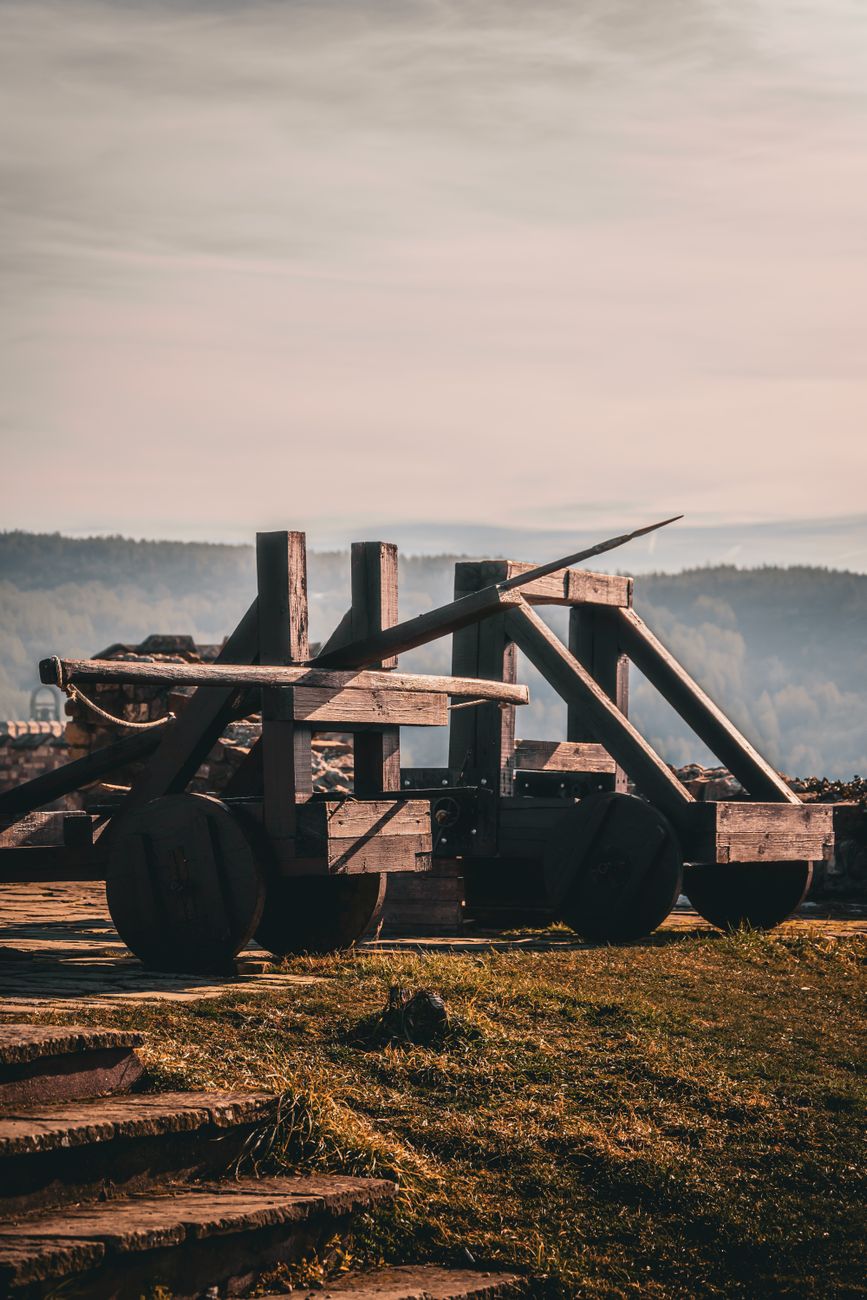
The skeleton of the tower was typically built from green wood. While seasoned timber is stronger, freshly cut, unseasoned wood was preferred for a crucial reason: its high moisture content made it significantly more resistant to fire. In an age where flaming arrows and pots of burning pitch were standard defensive tools, this was a critical design choice. The main frame would be assembled on-site, often just out of the range of the castle’s archers, by a team of skilled carpenters and military engineers. These were not just laborers; they were specialists whose knowledge of physics and materials was as vital as any knight’s skill with a sword.
Once the frame was erected, it was covered in protective layers. The most common defense was a cladding of rawhide or animal skins—usually from cattle or horses—that were soaked in water or vinegar. This dripping, fleshy armor served a dual purpose. It could extinguish flaming projectiles on impact and provided a surprisingly effective shield against conventional arrows and crossbow bolts. The sight and smell of a massive wooden tower covered in glistening, wet animal hides, creaking forward under its own immense weight, must have been a profoundly unsettling experience for those on the walls.
Internally, the tower was a hive of activity. It was a multi-story structure, with each level connected by simple wooden ladders. The lower levels were often spartan, housing the men tasked with the grueling job of pushing the colossal machine forward. Higher levels might contain contingents of archers or crossbowmen, who would use the tower’s height advantage to rain down suppressive fire on the defenders, clearing the ramparts for the final assault. The top level was the most critical. It housed the elite assault troops—men like the Knights Templar, chosen for their courage and skill—and featured a hinged drawbridge. At the decisive moment, this drawbridge would be lowered onto the castle wall, creating a direct path for the attackers to pour into the fortress.
Beyond brute force: the strategic role of the siege tower
The common misconception about the siege tower is that its role was simple: roll up to the wall and unload soldiers. While this was its ultimate function, its strategic value on the battlefield was far more nuanced. A siege tower was not just a weapon; it was the centerpiece of a comprehensive siege strategy, a focal point that dictated the actions of both the attackers and defenders.
First and foremost, it was a weapon of psychological warfare. The slow, inexorable construction of a tower in the enemy’s line of sight was a powerful statement of intent. It told the defenders that their walls, no matter how high, were not insurmountable. Every day, they would watch it grow taller and more formidable, a constant, looming reminder of the impending assault. This relentless pressure could erode morale, sow dissent, and sometimes even compel a garrison to surrender before the tower was ever used.
Operationally, the tower served as a mobile command and suppression platform. Its height gave commanders an unparalleled view of the battlefield, allowing them to direct troop movements and identify defensive weaknesses. The archers stationed within the tower could engage defenders on the walls directly, pinning them down and making it incredibly dangerous for them to expose themselves. This covering fire was essential for protecting the sappers and miners working at the base of the walls and the soldiers manning the battering ram. The siege tower did not operate in a vacuum; it was the heart of a coordinated assault, working in concert with a symphony of other siege engines to break a fortress.
However, these rolling fortresses were not invincible. Their greatest weaknesses were fire and terrain. Defenders would launch a constant barrage of flaming arrows, pots of Greek fire, and other incendiary devices, hoping to find a dry spot on the animal hides or a chink in the wooden armor. Attackers, in turn, often had dedicated ‘fire-fighting’ crews who would douse the tower with water from buckets or skins. The ground itself was another major obstacle. Before a tower could be moved, the attacking army had to undertake the laborious task of leveling the ground and filling in the castle’s moat. This was dangerous work, done under constant fire from the walls. A well-placed ditch, a sudden patch of soft ground, or a cleverly hidden obstacle could halt a tower in its tracks, leaving it a vulnerable, stationary target for the defenders’ artillery.
The human element: life and death inside the belly of the beast
While the engineering and strategy are fascinating, it is crucial to remember the human experience at the heart of this machine. For the soldiers tasked with operating and fighting from a siege tower, it was a claustrophobic, terrifying, and profoundly visceral experience. The interior was a dark, cramped world of creaking timber, shouting men, and the foul stench of sweat, fear, and damp animal hides.

The men at the bottom had arguably the most physically demanding job. Shielded from direct view but not from the percussive impact of stones hitting the frame, they pushed the behemoth forward inch by painstaking inch. Above them, archers would be firing through narrow slits, their vision limited, their ears filled with the whizz of enemy arrows striking the wooden exterior. But the greatest tension was reserved for the men at the very top: the assault party. Crowded together in the dark, they would wait, listening to the cacophony of battle outside. They could feel the tower lurching and swaying, hear the thud of projectiles against the walls, and feel the heat from enemy fire. Their faith and discipline, honed through years of training, were all that stood between order and panic.
The final moments were the most intense. As the tower ground to a halt against the stone battlements, the sound would be deafening. Then came the command to lower the drawbridge. The heavy ramp would slam down onto the parapet with a thunderous crash, and for the first time, the attackers would come face-to-face with the defenders. This was the moment of truth. The first men across the bridge—often heavily armored knights sworn to lead the charge—faced a storm of steel. It was a brutal, desperate, close-quarters fight on a narrow walkway, with a deadly drop on either side.
For a Knight Templar in this position, his iconic white surcoat marked with the red cross was not just a symbol of his order; it was a battle standard. He was the tip of the spear, the embodiment of the assault. The success of the entire, months-long siege effort rested on the shoulders of these men in these few frantic seconds. Their ability to secure a foothold on the wall, to create a breach in the shield wall, would determine victory or defeat. The siege tower, for all its mechanical ingenuity, was ultimately a delivery system for human courage and ferocity.
Looking back, the siege tower stands as a testament to the brutal innovation of medieval warfare. It was far more than a mythologized movie prop. It was a complex engine that combined advanced engineering, psychological intimidation, and grand strategy. By decoding its construction, its purpose, and the human drama that unfolded within its wooden walls, we gain a deeper, more profound respect for the medieval world and the warriors who inhabited it.
 knighttemplar