In any U.S. workplace, from healthcare to industrial sites, how a team presents itself matters. Uniforms and professional appearance aren’t just about looking good; they’re about clear communication, safety, and operational effectiveness. Looking back at historical organizations, like the Knights Templar, can offer surprising parallels to today’s challenges in managing professional attire.
Understanding how groups in the past used specific dress standards to define roles and ensure discipline provides a practical framework. This isn’t about history for history’s sake, but about extracting actionable insights for supervisors and employees navigating daily work realities and uniform decisions today.

Establishing Clear Dress Standards for Team Identity
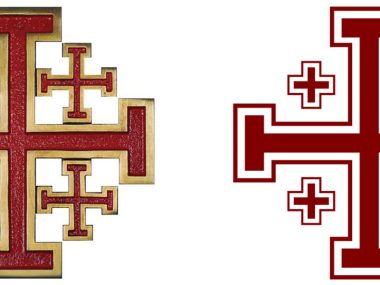
One primary function of any uniform is to establish a clear identity. For the Knights Templar, their distinctive white mantle with a red cross was instantly recognizable. It wasn’t merely clothing; it was a powerful visual statement of their purpose and allegiance. This clarity minimized confusion and reinforced their collective identity to both allies and adversaries.
In modern U.S. workplaces, the principle remains the same. Whether it’s a healthcare team in matching scrubs, service staff in branded polos, or industrial workers in specific safety gear, uniforms immediately communicate who belongs to a team and what their role might be. This visual consistency builds trust with clients and patients, and it fosters a sense of unity among employees. When dress standards are clear and consistently applied, everyone understands the expectation, which supports a cohesive team image.

Compliance and Discipline in Professional Attire
The Knights Templar operated under strict rules, and their attire was no exception. Regulations covered everything from the color of their garments to the specific placement of their cross. Adherence to these standards was a matter of discipline and organizational integrity. Any deviation could undermine their collective image and operational effectiveness.
For today’s U.S. professionals, compliance with dress codes is equally critical, often for practical reasons beyond mere appearance. In industrial settings, proper Personal Protective Equipment (PPE) is non-negotiable for safety. In healthcare, specific attire ensures hygiene and prevents contamination. Even in corporate environments, a professional dress code supports a serious, competent image. Supervisors face the practical challenge of communicating these standards clearly and enforcing them consistently. Vague policies or inconsistent enforcement can lead to confusion, resentment, and ultimately, a breakdown in professional presentation or safety protocols.

Balancing Symbolism with Practicality in Uniform Design
While the Templar mantle carried deep symbolism, it also needed to be practical for their demanding duties. The materials and design had to withstand the rigors of their lifestyle. This balance between symbolic meaning and functional utility is a constant consideration in modern uniform design.
Today, uniforms must be durable enough for daily wear, comfortable for long shifts, and appropriate for the physical demands of the job. For example, a service technician needs clothing that allows for movement and carries tools, while a hospital aide requires breathable, easy-to-clean fabrics. The challenge lies in selecting uniforms that convey a professional image and brand identity while also meeting the practical needs of the wearer. Overlooking factors like ease of maintenance, material longevity, or suitability for different climates can lead to increased costs, discomfort, and a negative impact on employee morale. Practical decision-making here involves weighing initial cost against durability and employee comfort.

However, focusing solely on the upfront price can obscure longer-term issues. A uniform that seems cost-effective initially might require frequent replacement due to poor fabric quality or weak stitching. This doesn’t just mean buying more uniforms; it adds administrative burden for reordering, inventory management, and distribution. The cumulative cost of these repeated purchases and the associated labor can quickly surpass the savings from the initial low price point.
Beyond direct financial outlays, there’s the less tangible but equally impactful cost of employee morale and productivity. An uncomfortable or ill-fitting uniform can be a constant source of distraction throughout a shift. If uniforms fade quickly, pill after a few washes, or restrict movement, employees may feel their professional image is compromised, or worse, that their comfort and safety were not prioritized. This can lead to frustration, a dip in team spirit, and even an increased rate of minor complaints or requests for different gear, all of which consume management time.
What looks good on a spec sheet or in a sample often performs differently under real-world conditions. A fabric might be advertised as breathable, but in a hot, humid industrial setting, it might trap heat. Similarly, pockets designed for tools might be impractical once filled, or seams might chafe during repetitive motions. These discrepancies between theoretical performance and practical application put pressure on supervisors who must balance budget constraints with the daily realities faced by their teams. The decision isn’t just about a garment; it’s about supporting the people who wear it day in and day out.
The Enduring Legacy of Professional Presentation
The Knights Templar’s consistent appearance and disciplined conduct contributed significantly to their historical reputation and influence. Their legacy underscores the long-term impact of a unified, professional presentation.
In the modern workplace, a consistent professional appearance does more than just meet a dress code; it builds an organization’s credibility and fosters a sense of shared purpose among employees. It signals to clients, customers, and the public that the team is organized, reliable, and committed to its work. This isn’t about an unlimited budget for the latest styles, but about making practical choices that reflect competence and dedication. Even under time pressure or job constraints, maintaining these standards reinforces a positive work culture and supports the organization’s overall mission. The principles of clear identity, disciplined compliance, and practical design, evident in historical groups, remain relevant for any U.S. professional aiming for effective workplace presentation today.

 Templar Uniform Editorial