Understanding the meaning behind symbols, whether from historical orders or modern company logos, offers practical insights for our daily work. It helps us see how uniforms and professional attire communicate more than just a dress code.
For supervisors and team members across healthcare, service, industrial, and office settings, recognizing these underlying messages can inform decisions about uniform choices, team coordination, and maintaining a consistent professional image. It’s about understanding what our clothing says without words.

The Red Cross: Communicating Purpose and Role
The red cross on a white background was a primary symbol for the Knights Templar. Its meaning was clear: it identified them immediately and signaled their specific role and mission. There was no ambiguity about who they were or what they represented.

In today’s workplaces, a clear, consistent symbol on a uniform serves a similar purpose. Think about the logo on a service technician’s shirt, the color-coded scrubs in a hospital, or the emblem on a security guard’s jacket. These symbols provide instant recognition for clients, patients, or the public. They communicate trust and professionalism, helping individuals quickly identify who to approach for assistance or information.
The Seal of Two Knights: Emphasizing Teamwork and Shared Purpose
The official seal of the Templars often depicted two knights riding a single horse. Historically, this symbolized their initial poverty and, more importantly, their brotherhood and shared commitment. It visually represented unity and a common purpose, where individual needs were secondary to the group’s mission.

This concept of shared purpose is vital in any U.S. workplace. Uniforms, especially those with consistent branding or design elements, can foster a strong sense of team identity. When everyone wears the same uniform, it reinforces that they are part of a collective working towards a common goal. This can be particularly important in fast-paced or high-stakes environments where coordination and mutual support are critical.
The Beauséant Banner: Projecting Unity and Professional Standards
The Beauséant was the Templar battle standard, typically black and white. Its two-tone design was said to represent their dual nature: fair and friendly to Christians, but fierce and terrible to their enemies. More broadly, it projected a clear, unwavering stance and a unified front.

In a modern professional context, your team’s uniform acts as its own Beauséant. The overall appearance, from the quality of the fabric to the cleanliness and fit, projects your organization’s standards. A consistent, well-maintained uniform communicates professionalism, attention to detail, and a unified approach to service or work. It tells customers or clients that your team operates with a clear set of values and expectations.
What often gets overlooked is the lifecycle cost and practical upkeep. An initial investment in uniforms might seem straightforward, but the real impact emerges over time. Opting for lower-cost materials or construction can lead to premature wear and tear. This means uniforms need replacing more frequently, turning what seemed like a budget-friendly choice into a recurring expense that ultimately costs more and demands more administrative effort in the long run.
Beyond the material itself, the fit and ongoing maintenance are critical yet frequently underestimated factors. A uniform, no matter how high-quality, fails to project professionalism if it’s ill-fitting—too tight, too loose, or improperly hemmed. Such issues not only detract from the intended image but can also hinder an employee’s comfort and mobility, subtly impacting their performance and morale throughout the workday. The responsibility for cleaning and minor repairs also adds a layer of complexity; if this burden falls entirely on the individual, it can lead to inconsistent standards or quiet resentment, eroding the very sense of unity the uniform is meant to foster.
Applying Symbolism to Your Team’s Uniform Choices
When selecting or updating uniforms, consider the practical messages they send. It’s not just about compliance or cost; it’s about what the uniform communicates about your team and organization.
Ask yourself: Does this uniform clearly define roles and responsibilities? Does it promote a sense of unity and shared purpose among team members? Does its appearance project the professional standards we aim to uphold?

Balancing comfort, durability, and budget with these symbolic messages is a practical trade-off. A uniform that is uncomfortable or wears out quickly undermines the positive message it’s meant to convey. Overlooking these non-verbal cues can lead to a disconnect between your organization’s stated values and its daily presentation. Choose uniforms that are practical for the job, comfortable for the wearer, and effectively communicate your team’s professional identity.
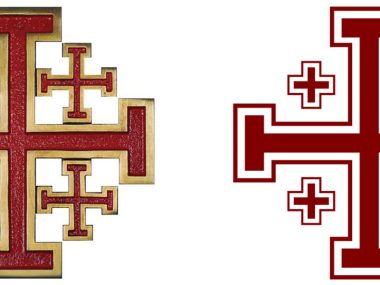
 Templar Uniform Editorial