The Enduring Legacy of Heraldry
Heraldry, a system of hereditary devices originating in medieval Europe, transcends mere decoration. It is a sophisticated visual language that historically served as a crucial identifier on the battlefield and a powerful emblem of lineage and status. Far from being a relic of the past, the principles of heraldry continue to resonate in contemporary design, offering a profound way to express personal identity and affiliation.
In an era where personal branding and unique expression are highly valued, understanding the art of heraldry provides a rich framework for styling with symbolic flair. It connects us to a tradition of meaningful iconography, allowing for the creation of personal narratives through carefully chosen emblems and colors. This timeless appeal ensures that heraldry remains a relevant and inspiring source for those seeking depth in their aesthetic choices.

From Battlefield to Banner: Heraldry’s Origins
The genesis of heraldry is deeply intertwined with the practical necessities of medieval warfare and the tournament field. As armor evolved to cover the entire body, making individual recognition impossible, knights began to paint distinctive designs on their shields, surcoats, and banners. These unique symbols, or ‘arms,’ became essential for identifying friend from foe and for distinguishing noble families.
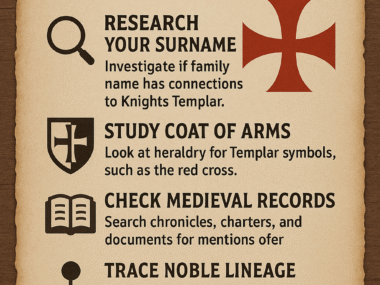
For orders like the Knights Templar, heraldry, though often simpler and more uniform, was equally vital. Their iconic red cross on a white field was not just a symbol of faith but a powerful, instantly recognizable emblem that united their ranks and struck fear into their adversaries. This simple yet potent design exemplified the clarity and impact that heraldic symbols could achieve.

Over time, these practical identifiers evolved into a complex system governed by specific rules and conventions, passed down through generations. The elements of a coat of arms – the shield, crest, motto, and supporters – each carried specific meanings, telling a story of family history, achievements, and values.

Decoding the Language of Symbolic Flair
At its core, heraldry is a language of symbols, where every color, charge, and division carries specific meaning. The ‘tinctures’ (colors and metals) are fundamental: gold (Or) often signifies generosity, silver (Argent) peace, red (Gules) courage, and blue (Azure) loyalty. These choices were never arbitrary but were carefully selected to reflect the virtues or aspirations of the bearer.
Beyond colors, the ‘charges’ – the figures placed on the shield – are equally significant. Lions often represent bravery, eagles denote strength, and fleurs-de-lis symbolize purity or royalty. Even the divisions of the shield, such as a bend or a fess, contribute to the narrative, indicating specific achievements or alliances. Understanding these elements allows for a deeper appreciation of the stories embedded within each design.

This intricate system ensured that a coat of arms was more than just a pretty picture; it was a concise visual biography, instantly communicating status, lineage, and personal attributes to anyone familiar with its conventions. This depth of meaning is precisely what gives heraldry its enduring power and appeal.
Heraldry in the Modern Wardrobe and Lifestyle
Today, the influence of heraldry extends far beyond historical societies and academic study, permeating contemporary fashion, branding, and personal accessories. Designers frequently draw inspiration from heraldic motifs, incorporating strong, emblematic symbols into clothing lines, jewelry, and even home decor. The desire for unique, meaningful items has led to a resurgence in personalized and bespoke designs that echo heraldic principles.
From embroidered blazers featuring stylized crests to custom-designed signet rings, individuals are increasingly seeking ways to infuse their personal style with a sense of history and identity. This modern interpretation often simplifies traditional heraldic complexity, focusing on clean lines and impactful symbols that resonate with contemporary aesthetics while retaining their symbolic weight.

The appeal lies in the ability of heraldic-inspired elements to convey a sense of heritage, belonging, or personal values without needing extensive explanation. It’s a subtle yet powerful way to communicate who you are and what you stand for, adding a layer of sophistication and narrative to everyday items.
Crafting Personal Identity Through Emblems
Incorporating symbolic flair into one’s personal style is an art form that allows for profound self-expression. Whether through a custom-designed emblem that represents personal values or the adoption of a historical motif that resonates with one’s interests, the goal is to create a visual statement that is both unique and meaningful. This can manifest in various ways, from bespoke jewelry featuring a personalized crest to apparel adorned with a significant symbol.
Consider commissioning a piece of jewelry with a stylized initial or a symbol that holds personal significance, such as an animal representing a desired trait or a geometric pattern with a hidden meaning. Similarly, accessories like scarves, ties, or bags can be customized with subtle embroidered emblems. The key is to choose symbols that genuinely reflect your identity, aspirations, or heritage, transforming everyday items into personal talismans.

This approach to styling moves beyond fleeting trends, focusing instead on timeless elements that tell a personal story. It encourages a thoughtful consideration of what one wishes to convey, resulting in a wardrobe and lifestyle that are rich in personal narrative and symbolic depth.
The Enduring Appeal of Shared Symbolism
The power of heraldry extends beyond individual expression, fostering a sense of community and shared identity. Just as the Knights Templar were united by their distinctive cross, modern groups and communities often rally around common symbols that embody their collective values and aspirations. These emblems serve as visual anchors, reinforcing bonds and communicating a shared purpose to both insiders and outsiders.
In an increasingly interconnected world, the desire for belonging and collective identity remains strong. Whether through a club emblem, a team logo, or a community banner, shared symbolism provides a tangible representation of unity. The art of heraldry, with its rich history of signifying allegiance and identity, continues to offer a powerful framework for creating and understanding these unifying visual narratives, ensuring its relevance for generations to come.

 Templar Uniform Editorial