
In the grand tapestry of knightly attire, few items are as fundamentally important, yet as frequently overlooked, as the leather belt. More than a simple strap to hold up one’s chausses or secure a tunic, the belt, or cingulum militare, was the very symbol of a knight’s station, his oath, and his readiness for action. For the Poor Fellow-Soldiers of Christ and of the Temple of Solomon, the Knights Templar, this piece of leather was a testament to their dual nature: a humble girdle for a monk, a sturdy sword-bearer for a warrior. Fast forward to 2025, and the allure of this iconic accessory has not faded. It has transformed, finding new life not just in historical reenactments, but in the everyday wardrobe of the modern man who values heritage, craftsmanship, and a touch of chivalrous spirit. This guide is for the beginner, the enthusiast who stands at the threshold, looking to invest in their first true leather belt—a piece that connects them to a legendary past while serving them faithfully in the present.
The historical significance of the knightly belt
Before you can truly appreciate the weight of a well-made leather belt around your waist, you must first understand the weight of its history. For a medieval knight, the belt was far from a mere fashion accessory. It was a piece of core equipment, a public declaration of his identity and vows. The act of receiving a belt and sword was central to the ceremony of knighthood itself, a ritual known as girding. This act symbolized the knight’s commitment to justice, his readiness to defend the weak, and his acceptance of the responsibilities of his station. To be ‘ungirded’ was a mark of disgrace, to have one’s belt and spurs broken was the ultimate humiliation for a defeated or dishonored knight.


The Templar belt, in keeping with the Order’s strict rule, was a reflection of their austere principles. While secular knights might sport belts adorned with gold, silver, and precious gems, the Templar belt was brutally functional. It was crafted from thick, durable cowhide, designed to withstand the rigors of campaign and the weight of a longsword, dagger, and pouch. The buckle was typically a simple, robust design in iron or brass, devoid of ostentatious decoration. This simplicity was not a sign of poverty, but a deliberate choice symbolizing their vow of poverty and their focus on martial and spiritual duty over worldly vanity. It was a tool, a symbol, and a constant, tactile reminder of the knight’s pledge. Every crease in the leather told a story of a journey, every scuff a testament to a duty performed. This rich legacy of symbolism and function is the foundation upon which the modern appreciation for Templar-inspired belts is built. It’s the reason why a simple leather strap can evoke such a powerful sense of purpose and history, even in the 21st century.
Choosing your first leather belt in 2025: materials and craftsmanship
As you begin your quest for the perfect leather belt, you’ll quickly discover a world of options, qualities, and confusing terminology. For a beginner in 2025, the key is to focus on the timeless principles of quality material and honest craftsmanship. A well-chosen belt is an investment that will not only last for decades but will also improve with age, developing a unique character, or ‘patina’, that tells your own story.
Understanding the leather
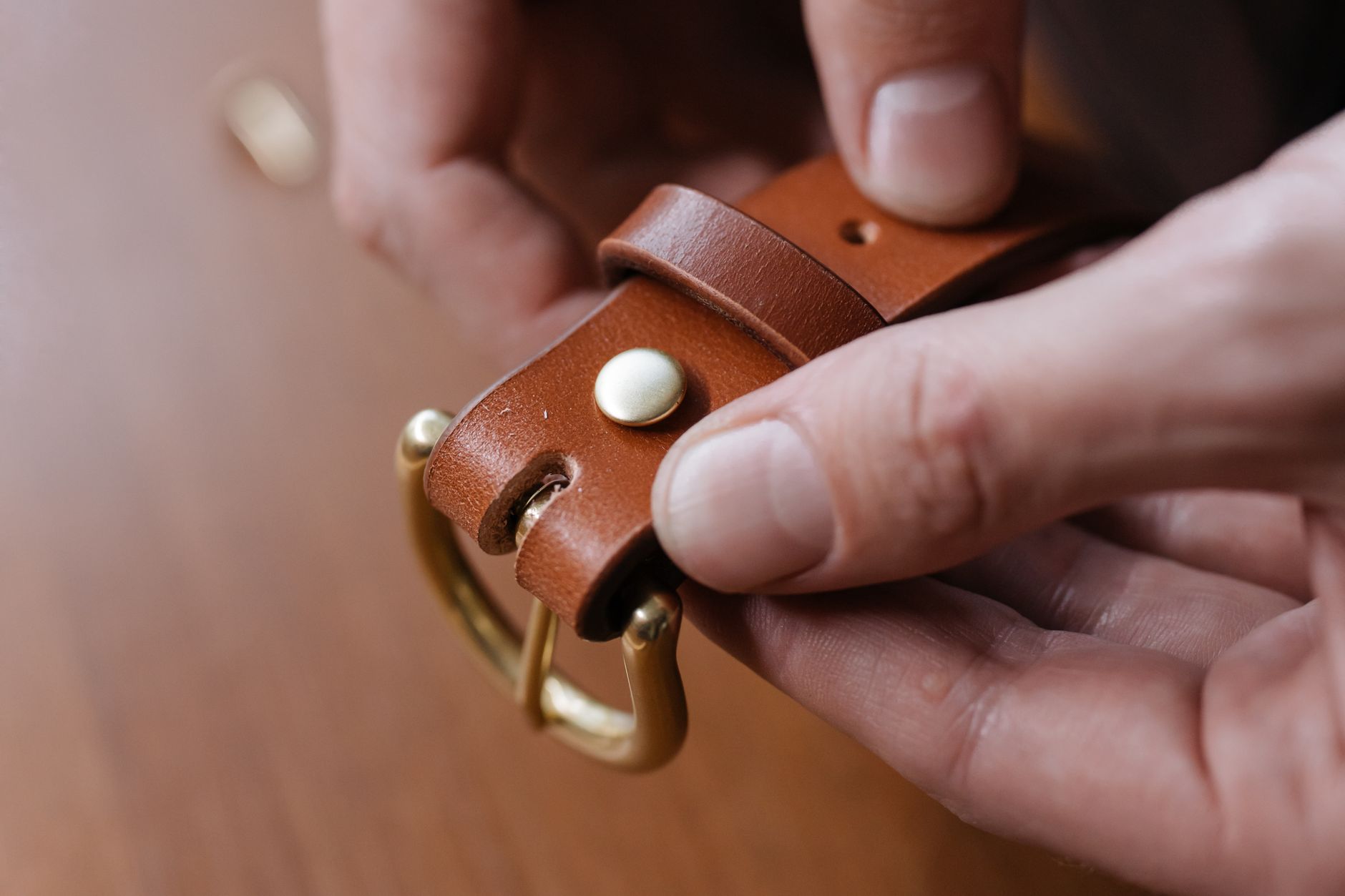
Not all leather is created equal. The most crucial factor in a belt’s longevity and appearance is the type and grade of the hide used. Here’s what you need to know:
- Full-Grain Leather: This is the gold standard. It comes from the top layer of the hide and includes all the natural grain with its inherent imperfections. It is the strongest and most durable type of leather available. A full-grain belt will be stiff at first but will soften beautifully over time, developing a rich patina that is impossible to replicate. This is the closest you can get to the authentic, hard-wearing belts of the Templars.
- Top-Grain Leather: The second-highest quality, top-grain leather has had the very top layer sanded off to remove imperfections. It’s more pliable and has a more uniform finish than full-grain, but it is slightly less durable and won’t develop as dramatic a patina.
- Genuine Leather: Be wary of this term. While it sounds impressive, ‘genuine leather’ is often a marketing label for the lower-quality layers of the hide that are glued and pressed together. It lacks the strength and character of full-grain and should generally be avoided for a ‘buy it for life’ piece.
Beyond the grain, consider the tanning method. Vegetable-tanned (‘veg-tan’) leather uses natural tannins from bark and plant matter. It’s a traditional, time-consuming process that results in a firm, beautiful leather that ages exceptionally well, making it the ideal choice for a historically inspired belt.
Hardware and construction
The buckle and other metal components are the belt’s functional heart. Look for solid brass, stainless steel, or pewter. These materials are strong, corrosion-resistant, and have a satisfying weight. Avoid cheap, plated alloys that will chip and tarnish over time. For a Templar-inspired look, a simple, hand-forged iron or distressed brass buckle is a fantastic choice. The width of the belt is also a key consideration. A historical sword belt was often 1.5 to 2 inches wide for strength. For modern, everyday wear with jeans, a 1.5-inch width is a versatile and robust standard. Finally, examine the edges. A quality belt will have ‘burnished’ edges—smoothed, sealed, and polished by hand. This small detail not only looks professional but also prevents the edges from fraying, adding to the belt’s longevity.
Styling the Templar-inspired belt: from historical garb to modern fashion
Owning a piece of chivalrous apparel is one thing; wearing it with confidence and style is another. The beauty of a well-made, historically inspired leather belt in 2025 is its remarkable versatility. It can be the centerpiece of a period-accurate costume or a subtle, powerful accent in a contemporary wardrobe.
The traditional wear

For reenactors, LARPers, or attendees of Renaissance faires, wearing the belt correctly is paramount. A common feature of medieval belts is the ‘tail’—the long piece of extra leather left hanging after the buckle. To achieve this look, the belt is passed through the buckle and then looped under the belt itself, creating a knot just beside the buckle, allowing the tail to hang down elegantly. This style is not just for show; it historically kept the excess length from flapping about on horseback. Paired with a linen tunic, wool trousers, and leather boots, the belt becomes the anchor of the entire ensemble, ready to be fitted with pouches, a drinking horn, or the all-important sword frog.
The modern knight’s aesthetic
Integrating such a bold piece into modern fashion is where the ‘reimagining’ truly happens. Don’t relegate your Templar-inspired belt to costume use only. A high-quality, 1.5-inch full-grain leather belt is the perfect companion for a pair of raw denim jeans or rugged canvas trousers. Its substantial presence provides a grounding counterpoint to a simple t-shirt and can elevate a casual flannel or chambray shirt into a more considered, masculine outfit. Think of it as a statement piece. Where others wear a generic department store belt, yours tells a story of strength, tradition, and an appreciation for things that are built to last. It’s a subtle nod to the warrior-poet archetype, blending rugged utility with a sense of historical romance. You can even wear a wider belt over a thick, knitted winter cardigan or a field jacket, cinching the waist to create a strong, defined silhouette that echoes its military origins. The key is to let the belt be the star. Keep the rest of the outfit relatively simple and let the quality and character of the leather speak for itself. It is more than an accessory; it is a declaration that you value substance, history, and the enduring spirit of the chivalrous code.

 Templar Uniform Editorial


