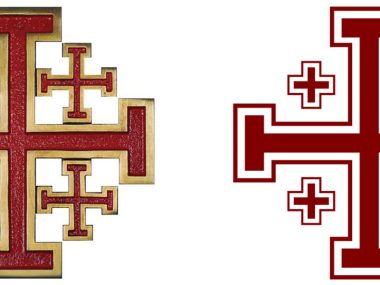
The image of the Knights Templar is one of martial prowess, of stoic figures in white mantles emblazoned with a red cross. They were the elite fighting force of the Crusades, bankers to kings, and masters of a logistical empire that spanned Christendom. Yet, beneath the mail and the sword lay a purpose far deeper than earthly power. They were the Poor Fellow-Soldiers of Christ and of the Temple of Solomon, an order founded to protect pilgrims on the dangerous roads to the Holy Land. This sacred duty extended beyond protecting people; it involved safeguarding the very heart of the Christian faith—its holy relics.
These relics, fragments of bone from a saint, a splinter of the True Cross, or a piece of cloth that touched Christ, were the physical conduits to the divine in the medieval world. They were not mere objects but reservoirs of spiritual power. And to house them, artisans crafted some of the most breathtaking objects of the era: reliquaries. These vessels, wrought from gold, silver, ivory, and precious gems, were more than just containers; they were statements of faith, works of art, and symbols of immense power and prestige. For the Knights Templar, an order steeped in the mysticism and piety of Jerusalem, the possession and protection of such items was paramount. But with the Order’s dramatic dissolution and the subsequent centuries of myth-making, a crucial question arises: How do we separate authentic Templar relics from the whispers of legend? This is a journey into the meticulous world of documenting history, where faith, science, and forensic investigation collide.

The anatomy of a holy vessel: understanding the reliquary
Before we can delve into the complexities of authenticating a Templar artifact, we must first understand the object in question. A reliquary is, in its simplest terms, a container for a holy relic. In the medieval mind, however, it was a piece of heaven on earth. The craftsmanship and material value of the reliquary were meant to reflect the infinite spiritual value of the sacred object it contained. They were never meant to be plain boxes; they were intricate, symbolic masterpieces designed to inspire awe and devotion.

Relics themselves were categorized into a clear hierarchy:
- First-Class Relics: These are the most sacred, consisting of the physical remains of a saint, such as a bone, a lock of hair, or a vial of blood. For objects related to Jesus Christ, this would include items from the Passion, like thorns from the Crown of Thorns or fragments of the True Cross.
- Second-Class Relics: These are items that a saint owned or frequently used, such as a book, a vestment, or a crucifix. The connection is personal and direct.
- Third-Class Relics: These are objects that have touched a first-class relic. A piece of cloth pressed against a saint’s tomb, for instance, could become a third-class relic, believed to carry a portion of its sanctity.
The Knights Templar, with their headquarters on the Temple Mount in Jerusalem and their extensive network of preceptories across the Holy Land, were at the epicenter of the relic trade. They would have encountered, guarded, and almost certainly possessed countless such items. Historical accounts, though often frustratingly vague, speak of the Templars’ reverence for relics, particularly fragments of the True Cross, which they were known to carry into battle as a sacred standard, or vexillum. The reliquaries that housed these treasures would have been forged by the finest craftsmen in Outremer or Europe. They often took symbolic shapes—a golden arm to house the bone of a saint’s arm, a chapel-shaped chasse to hold multiple relics, or a crystal-fronted cross to display a splinter of the original. The artistry wasn’t merely decorative. The iconography carved and enameled onto the surface told the story of the saint or the sacred event, serving as a visual sermon for a largely illiterate populace. Tracing the origin of a reliquary, therefore, begins with a deep analysis of its style. Does the metalwork match techniques used in 12th-century Paris? Does the iconography align with Byzantine influences prevalent in the Crusader states? Every detail is a potential clue, a stitch in the fabric of its history.
The Templar provenance problem: a chain of custody broken by fire and sword
Herein lies the greatest challenge for any historian or archaeologist studying Templar artifacts: provenance. Provenance is the life story of an object, a documented, unbroken chain of custody from its creation to the present day. For a potential Templar reliquary to be considered authentic, one must be able to trace its ownership back to a specific Templar commandery. Unfortunately, the very history of the Knights Templar makes this an almost impossible task.

On Friday, October 13, 1307, King Philip IV of France, deeply in debt to the Order, unleashed a coordinated series of raids, arresting Templars across his kingdom. Inventories were seized, assets were confiscated, and the Order’s meticulous records were scattered, destroyed, or absorbed into the archives of their rivals, the Knights Hospitaller, or the French crown. This sudden, violent shattering of the Templar administrative network broke the chain of custody for nearly everything they owned. What happened to the reliquary that sat on the altar in the Paris Temple? Where did the sacred treasures of their London headquarters go? The answers are lost in a fog of historical chaos.
This vacuum of hard evidence has been filled by centuries of legend and speculation. The most famous and controversial of these is the Shroud of Turin. This linen cloth, bearing the faint image of a crucified man, is believed by many to be the burial shroud of Jesus Christ. Its first undisputed historical appearance in the 1350s in Lirey, France, was under the ownership of the family of Geoffroi de Charny, a knight whose namesake and possible ancestor was a Templar preceptor burned at the stake alongside Grand Master Jacques de Molay. This tantalizing connection has led many to theorize that the Templars were the secret guardians of the Shroud for the 150 years it was missing from the historical record after the sack of Constantinople. Yet, despite compelling circumstantial evidence, there is no definitive inventory, no secret letter, no document that says, “The Templars possess the Shroud.” There is only a gap in history and a plausible, but unproven, theory. The same problem plagues other legendary Templar relics like the Holy Grail or the Ark of the Covenant. The stories are powerful, but the provenance is a ghost. Documenting with authenticity requires us to acknowledge these gaps, to present the theories without declaring them as fact, and to hunt for the rare, surviving scraps of evidence that might illuminate the path.
Science, scripture, and spectrometry: the modern quest for authenticity
When the paper trail runs cold, modern science steps in. Today, authenticating a potential Templar reliquary is a multidisciplinary effort that combines traditional historical analysis with cutting-edge laboratory techniques. This forensic approach allows us to ask questions about an object that were impossible to answer even 50 years ago, helping to confirm or deny the claims made by its physical characteristics.

One of the most well-known methods is Carbon-14 (radiocarbon) dating. By measuring the decay of the carbon-14 isotope in organic materials like wood, linen, or parchment, scientists can determine their age with a remarkable degree of accuracy. This was famously applied to the Shroud of Turin in 1988, with results dating the cloth to between 1260 and 1390 AD—coinciding with its appearance in France, but contradicting the claim that it was Christ’s burial shroud. While the results remain hotly debated due to concerns about sample contamination and repairs, it demonstrates the power of science to test long-held beliefs.
Beyond dating, material analysis offers another layer of verification. Techniques like X-ray fluorescence (XRF) can determine the precise elemental composition of the metalwork on a reliquary without damaging it. An analyst could test a gold chasse and discover trace elements that are characteristic of gold mined in a specific region, or find that the alloy is a type not invented until the 18th century, instantly exposing a forgery. Similarly, palynology, the study of pollen grains, can provide a geographical fingerprint. Pollen found trapped in the weave of a cloth or the crevices of a wooden box can be identified and traced back to specific plant species from a particular part of the world, such as the environs of Jerusalem.
This scientific data, however, is meaningless in a vacuum. It must be paired with rigorous historical and art-historical analysis. Do the inscriptions on the reliquary use a script and terminology appropriate for the 13th century? Does the depiction of a saint match the iconography used by the Templars, as seen in their surviving chapels and manuscripts? Do the names mentioned in an accompanying document correspond to known historical figures? Authenticity is a puzzle. Science provides some of the most important pieces, but history and art provide the framework. The absence of a single piece doesn’t always disprove the whole picture, but every piece that fits makes the case stronger. The quest to document these sacred vessels is a testament to our desire to connect with the past, to touch the tangible remnants of faith and valor that the Knights Templar guarded so fiercely.
 Templar Uniform Editorial