Introduction: Origins and Purpose
The Order of the Poor Fellow-Soldiers of Christ and of the Temple of Solomon, more commonly known as the Knights Templar, emerged from the crucible of the First Crusade in the early 12th century. Founded around 1119 by Hugues de Payens and eight other knights, their initial mission was profoundly practical: to protect Christian pilgrims traveling to and from the Holy Land, a journey fraught with peril. This unique blend of monastic devotion and military prowess set them apart from other religious orders of the era.
Initially, the Templars were a small, impoverished group, relying on donations and living under strict vows of poverty, chastity, and obedience. Their dedication to safeguarding pilgrims along dangerous routes quickly earned them respect and recognition. This foundational purpose, born out of necessity and faith, would lay the groundwork for their rapid expansion and eventual transformation into one of the most powerful and influential organizations of the Middle Ages.


The Rise to Power and Influence
The Templars’ fortunes dramatically shifted following the Council of Troyes in 1129, where they received official papal recognition and the endorsement of influential figures like Bernard of Clairvaux, who helped draft their Rule. This papal bull granted them significant privileges, including exemption from local ecclesiastical jurisdiction and direct allegiance to the Pope. Such autonomy allowed them to operate across borders with unparalleled freedom, fostering their growth and influence.
Over the next two centuries, the Order amassed vast wealth, primarily through donations of land, money, and property from European nobility and royalty. They developed an advanced financial system, often credited as precursors to modern banking, managing large sums of money and facilitating transfers across continents. Their network of commanderies and fortresses stretched from the British Isles to the Middle East, making them a formidable military and economic force, deeply intertwined with the political landscape of medieval Europe.

Distinctive Templar Attire and Symbolism
The uniform of the Knights Templar was a powerful visual statement, embodying their dual identity as warrior monks. The most iconic element was the white mantle, worn by the knight-brothers, symbolizing purity, chastity, and their commitment to a monastic life. Sergeant-brothers, who formed a significant part of the Order’s military strength, typically wore black or brown mantles, reflecting a slightly different status within the hierarchy.
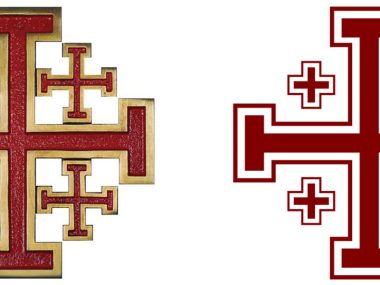
A crucial addition to their attire came in 1147, when Pope Eugenius III granted the Templars the right to wear a red cross on their left shoulder. This potent symbol, often a cross pattée, represented martyrdom and sacrifice, signifying their readiness to shed blood for Christ and the defense of the Holy Land. The simplicity and functionality of their uniform, devoid of excessive ornamentation, underscored their vows and their practical role as soldiers of God.

The Iconic Templar Cross
While various forms of the cross were used throughout the Templars’ history, the red cross pattée became synonymous with the Order. This specific design, characterized by arms that are narrow at the center and broader at the perimeter, was not merely decorative but deeply symbolic. It represented the four Gospels, the four cardinal virtues, and the four corners of the world, signifying the universal reach of Christianity and the Templars’ commitment to its defense.
Positioned prominently on the left shoulder of their white mantles, the cross served as an immediate identifier on the battlefield and a constant reminder of their sacred vows. It was a beacon of their crusading zeal and a visual testament to their readiness for ultimate sacrifice. Today, this emblem remains one of the most recognizable symbols of medieval chivalry and religious military orders, frequently referenced in popular culture and historical studies.

The Fall and Enduring Legacy
Despite their immense power, the Templars faced increasing scrutiny and political pressure as the Crusader states in the Holy Land dwindled. The loss of Acre in 1291, the last major Templar stronghold, removed their primary purpose and left them vulnerable. King Philip IV of France, heavily indebted to the Order and coveting their wealth, orchestrated their downfall. On Friday, October 13, 1307, Templars across France were arrested on charges of heresy, idolatry, and various other blasphemies.
Under torture, many confessed to fabricated charges, leading to widespread condemnation. Pope Clement V, under immense pressure from Philip IV, reluctantly dissolved the Order in 1312 with the papal bull Vox in excelso. The last Grand Master, Jacques de Molay, along with other senior Templars, was burned at the stake in 1314, famously cursing the King and Pope. Their dramatic and unjust end cemented their place in history as figures of both immense power and tragic victimhood.

Modern Echoes of Templar Symbolism
Centuries after their dissolution, the Knights Templar continue to captivate the public imagination. Their mystique, combined with the dramatic circumstances of their demise, has fueled countless legends and theories, from hidden treasures to secret lineages. This enduring fascination is evident in their pervasive presence across various forms of modern media, including historical novels, films, video games, and documentaries, which often explore their supposed secrets and influence.
Beyond popular culture, Templar symbolism, particularly the red cross and the imagery of the warrior monk, has been adopted and reinterpreted by various organizations, including certain branches of Freemasonry, which claim a spiritual or symbolic lineage. Currently, the aesthetic of Templar attire and heraldry also subtly influences contemporary design, appearing in fashion, art, and even architectural motifs, serving as a powerful reminder of an order whose impact transcended its own era and continues to resonate in the present day.

 Templar Uniform Editorial